Family Land
Mariah Vineyards is a Dream Come True
by Torrey Douglass
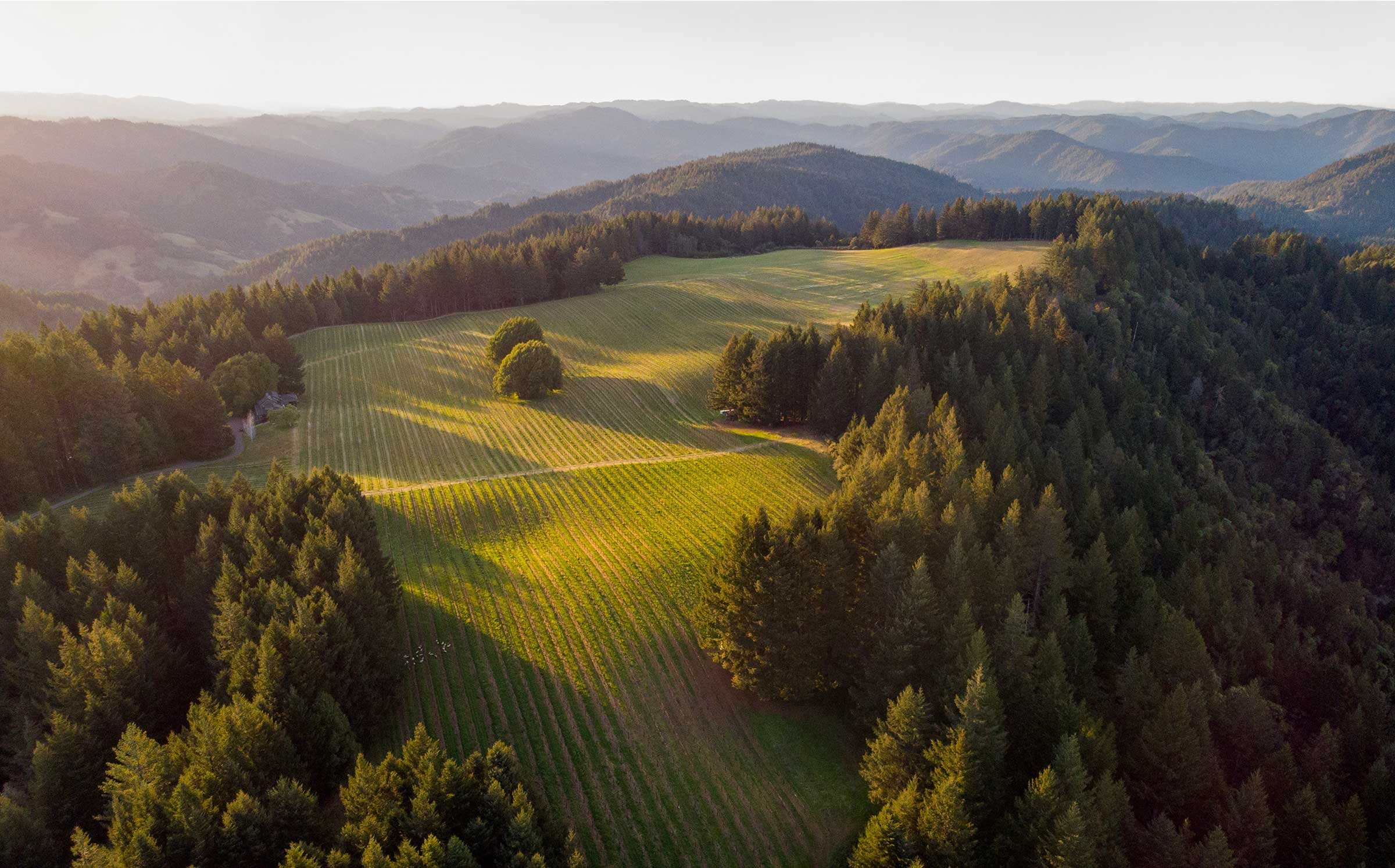
Mariah Vineyard is the second highest vineyard in the Mendocino Ridge AVA
When Dan Dooling was young, he would spend weekends at a 1200-acre vineyard in Napa Valley, running feral with a boy his age whose dad was a close friend of his father’s. The sunshine and freedom were a welcome change from the cool fog of San Francisco’s Haight-Ashbury neighborhood where his family lived. During one visit, Dan and his pal came across a slew of little flags planted in the ground— which the pair proceeded to collect and bring back to their dads who were visiting on the porch. His father’s friend, Ed, took a look at those flags and gave young Dan some wry advice. “When you plant your vineyard,” he said, “be sure to do it where there’s no economic incentive to build a freeway.” Within a few years, Route 29 would roll over the land where Dan used to play among the vines.
Both Dan and his wife Vicki grew up in San Francisco in Italian American families, but Dan has roots north of the city, too. His great-grandfather farmed a vineyard in Sebastopol where his grandmother grew up. She was still living there in the early 1970s after Dan graduated from Davis and got a job with Mondavi Winery. Living with her allowed him to save more towards his dream of owning his own vineyard, and working at Mondavi’s provided useful insights into the wine industry. He’d studied viticulture at Davis where he lived in the same dorm as Robert Mondavi’s son, Tim, who helped him get the job.
While the Mondavi gig was abundant in education, the pay was low. Dan‘s father, Mike Dooling, was well aware of Dan‘s dream. He had become a truck driver after returning from serving in Europe in 1945, logging over 5 million miles hauling for Safeway. So when a local brewery needed drivers, Mike gave his son a call.
Driving a truck means taking care of a truck, and that means going to auto parts stores from time to time. And sometimes, if you’re lucky, there’s a smart young woman behind the counter who might say yes to a date with you. Vicki was working in just such a shop in San Francisco when Dan walked in. She had grown up in the Ocean Beach neighborhood, but admits that she’s not much of a city person. An animal lover, she went to Davis to study animal science. After meeting Dan, she did some viticulture studies as well. While she never became a vet like she originally intended, she did end up working as a vet tech in both Gualala and Santa Rosa.
Dan searched all over Mendocino County for a property he could turn into a vineyard. It took five years, but in 1979 he bought roughly 90 acres from Ida Louise Jackson and her brother Everett. In 1922, Ida was the first black woman to graduate from UC Berkeley. She was also the first black woman to teach public school in Oakland. She used the 1280-acre ranch in the Anderson Valley hills to raise peacocks and sell their feathers to hat makers in the Bay Area.
The portion of Ida’s ranch that Dan purchased was level, had plenty of water, and was covered by forest. Dan cleared the trees, then planted 30 acres of Zinfandel, the primary grape grown in the area at the time. He and Vicki first lived in a tent, and then a 7’ x 20’ cabin, where they stayed for five years. Six months after their first child was born, they moved into a proper house designed by Dan and built by his good friend and fellow grape grower Bill Charles. Bill and his wife Nancy also shared freezer space with the Doolings, helping them keep food unspoiled until their off-grid system was installed. When the brewery that Dan hauled for closed, he started driving for Thrifty Drugs, logging road miles for them up until the mid-80s. After that he switched his focus to farming grapes, though he would still drive his 1965 Peterbilt locally, hauling apples, hay, and Christmas trees.
Dan irrigated his vineyard for the first 20 years, but when the irrigation system needed to be replaced, he took out the old piping and decided to wait before putting in new. At 2400’ of elevation, the ridge forces clouds to rise when they are blown inland. This results in a generous 70”-100” of rain per year and sometimes snow in the winter. The winds can be blustery, too. It was the windy nature of the location that led to the name Mariah, after the song “They Call the Wind Mariah,” from a 1951 Broadway musical.
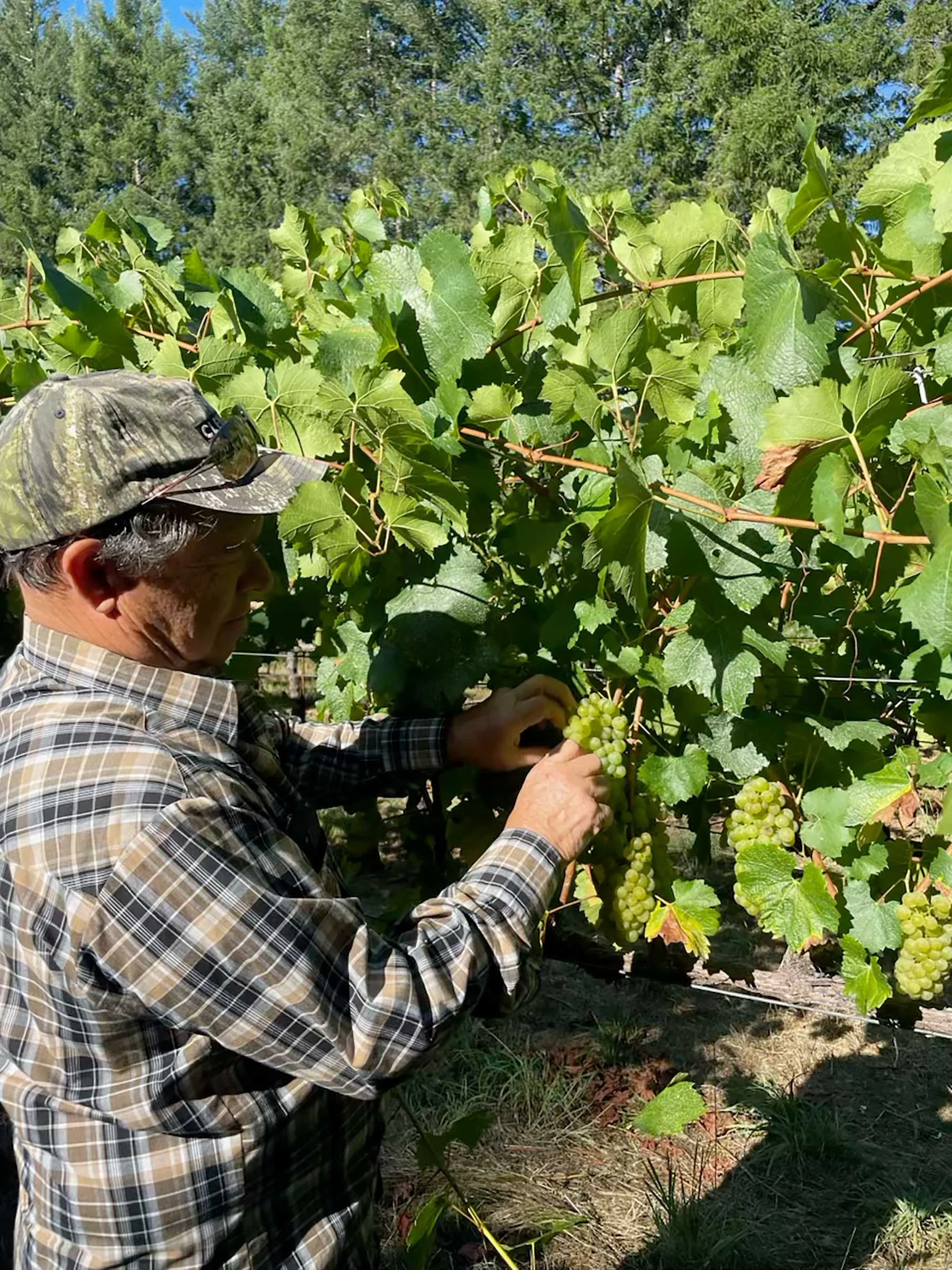
After removing the old irrigation lines, Dan hired a consultant to help monitor soil moisture. After four years with no issues, he let both the consultant and plans to replace the irrigation infrastructure go. The vineyards have been dry farmed ever since, which had always been his intention. Throughout the years of expansion, from the first Zinfandel planting to Syrah and Merlot then to Sauvignon Blanc, French and Italian Chardonnay, and four kinds of Pinot Noir clones, Dan always selected varietals he thought would thrive when dry farmed.
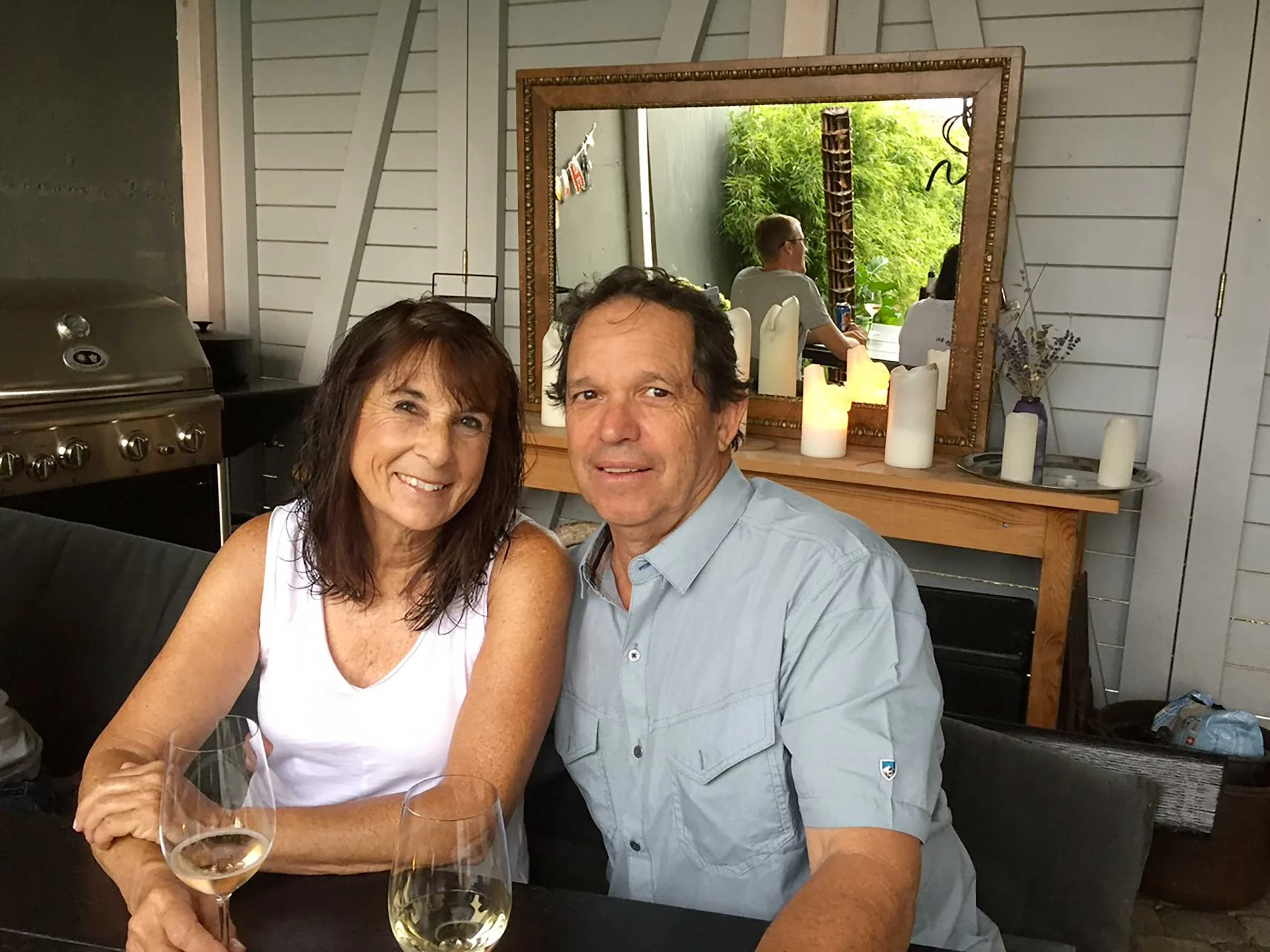
Family is central to the Doolings. In the early years, both sets of parents would come to help with land clearing, vine planting, and harvest. They are there still, as the ashes of each were brought back to the land. These days, Dan and Vicki’s four children are grown. They all have their own careers but return to help out—and enjoy some of Vicki’s exceptional home cooking—when they can. Their careers include firefighting and ER nursing for the daughters, and operating large equipment, truck driving, and tug boat operation for the sons.
Raising four kids off-grid is not for the faint of heart. In the thick of the school year, with sports, school, and events, Vicki could drive 1000 miles a week getting kids to where they needed to go. They are now grown and have collectively provided four grandsons, much to the delight of Dan and Vicki. And at least one has followed them into the wine business. Nicole, an ER nurse in San Francisco, has a wine label called DIRT with her husband Michael (referred to as “Swiss Michael” within the family to distinguish him from Nicole’s brother by the same name). DIRT stands for Directly Impacting Regenerative Transformation. The couple are passionate about producing high-quality wines with farming practices that leave the land better than they found it. Growing grapes without chemicals, making wine without additives, and providing care and expertise at every level of the process is a high bar, and Nicole and Michael are showing the rest of the industry how to reach it.
In 2019, Nicole and Michael attended a conference in Colorado where they met representatives from the Savory Institute, an organization devoted to regenerating grasslands around the globe through holistic management practices. The Institute’s Land to Market program is described on its website as “the first ever outcome-based sourcing solution for raw materials such as meat, dairy, wool, and leather.” Producers of those raw materials adopt the Holistic Management practices taught by the Institute, and their land is monitored to quantify improvements in soil health, water purity, and other metrics.
Nicole and Michael were inspired by the idea that farming can improve land rather than deplete it. They connected Dan and Vicki to the Savory Institute, and in 2020, Mariah Vineyards became the first and only viticulture site for the Land to Market Ecological Outcome Verification program for regenerative vineyards. There are 10 GPS sites on the property that monitor the soil health to ensure continued improvement.
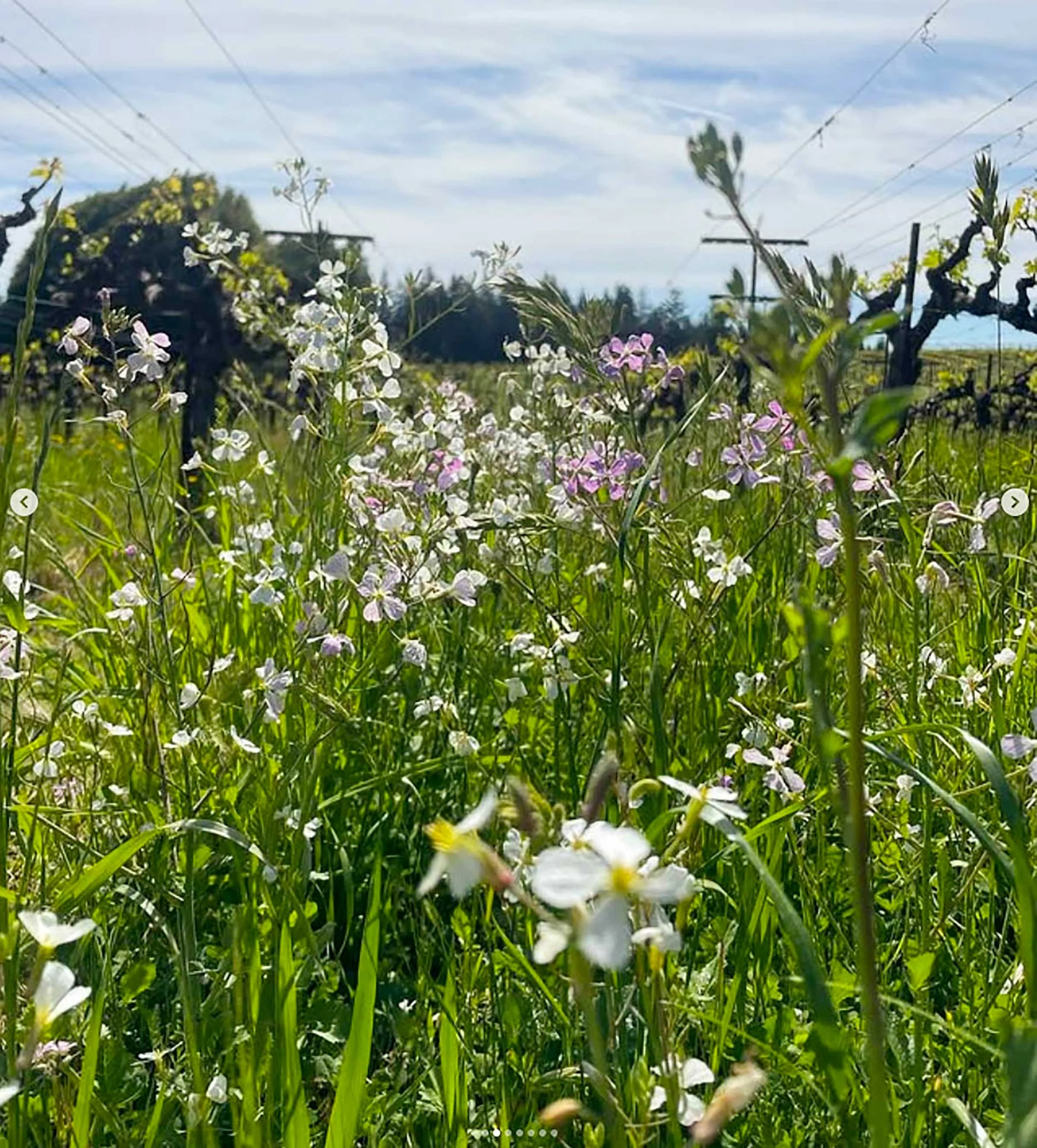
The two standard maintenance practices for managing weeds between rows are spraying glyphosate, which then can be detected in the wine, or tilling the weeds under, which disrupts the soil’s development and biodiversity, leaving it depleted. Dan and Nicole are currently experimenting with planting low-growing ground cover in the vine row. This attracts pollinators and other beneficial insects, all while fixing nitrogen and preventing erosion without mowing. His soil is an enviable 11% organic matter, and for every 1% increase, the soil can retain an additional 20,000 gallons of water per acre. Maximizing absorption capacity helps recharge aquifers, mitigate flooding, and reduce erosion.
One of the best things about partnering with Savory Institute is how it has brought people from around the world to their ridgetop vineyard out in the wilds of Mendocino County. Students and farmers from South Africa, Italy, and Austria have traveled to their door to see the first verified regenerative vineyard in the Land to Market program. Dan clearly takes great pride in the pristine nature of the property, remarking how there are no neighboring vineyards that could generate spray drift (which is how glyphosate can contaminate vineyards that choose not to use it) and how they’ve never used synthetic chemicals or fertilizers. He considers them to be, first and foremost, stewards of the land. “Rather than extracting financial wealth from the land and leaving it depleted, we want to leave it better than we found it,” shares Dan. “We want to take care of things for the next generation.” Vicki, too, cherishes the unspoiled quality of their land. “There’s so much destruction these days,” she says. “We’re still trying to make it better.”
Only 5% of the fruit becomes Mariah Vineyards wines. Vicki makes some of the wines herself, while others are made by ENA Winemakers, a pair of local, European-born winemakers. One of Mariah’s popular reds, called Primitivo, uses fruit from an Italian clone. This distinctive wine has light, unfussy flavors, while still possessing depth and complexity.
The other 95% of the grapes are sold to other wineries, including Waits-Mast, Seghesio, Lussier Wine Co., and TwelveEleven, all of which make vineyard designate wines from Mariah’s high-elevation, dry-farmed grapes.
The Doolings have tended Mariah Vineyards for 40+ years. Dan is one of the lucky ones who loves his work, relishing the physical effort it requires. “I enjoy what I do,” he reflects.“Some people work to live, and I live to work.” Watching the vines grow and produce as the seasons roll through brings him great joy. He recalls delivering grapes to Fetzer, every one a deep black “... and not a leaf in the bunch.” This meticulous attention to detail, rooted in a dedication to land and craft, has earned Mariah Vineyards the reputation for excellence it now enjoys. But as their partnership with Savory Institute shows, Dan and Vicki are not resting on their laurels. Instead, they work every day to grow their grapes and steward their land even better than before.
Mariah Vineyards
mariahvineyards.com
Torrey Douglass is a web and graphic designer living in Boonville. She is a big fan of books and cats.
