A Good Pour
Laytonville High Teaches the Art of Espresso
by Holly Madrigal
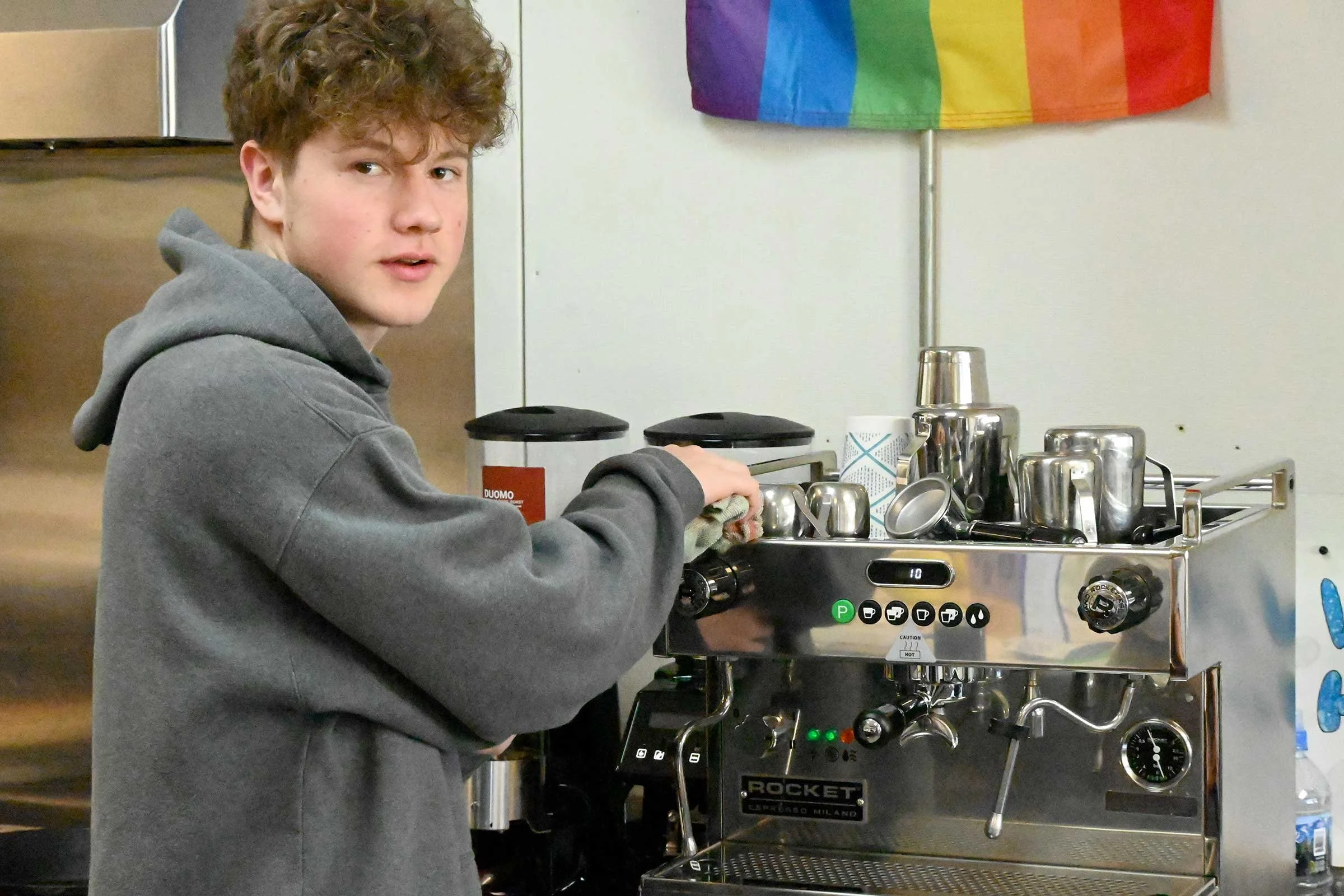
A Laytonville High School student works with the commercial espresso machine.
The steamer wand gurgles and hisses as it creates soft peaks of luscious foam. But this sound is not at your favorite coffee spot. It's at Laytonville High School’s Culinary Department, run by former student Lindsay Hansen, head of the program for 11 years now.
The busy espresso machine is part of the Career Technical Education (CTE) Culinary Arts program. Leadership decided to add it to the curriculum because of what they saw happening in the school's work experience program, through which students would intern and volunteer with various businesses around town. “We have had students working at the preschool or the health center, learning valuable skills,“ Lindsay says. “Many students choose to intern at the fire department, learning emergency response and gaining a leg up for a career in that field.”
“We track where our students go after graduation, as well as watch what jobs they take on while still in school,” continues Lindsay. “Because I run the work experience program, I notice what roles students tend to choose in the community. While in high school and right out of high school, we had a lot of students working at coffee shops in town.” There are a handful of coffee shops in Laytonville, including Friends Coffee Shop, Geiger’s Market, and Pour Girls Coffee.
Lindsay saw her students taking positions at these places and had an idea. “If our goal is to prepare students for careers, then I realized we could integrate coffee training into our culinary program. It will be useful for them and allow them to apply for a job with confidence and to be more successful there.”
Lindsay began researching coffee and espresso to learn what type of machine could work for the school. “I wanted it to be of quality—not cheap—and made to industry standards,” she shares. The school did not need the machine to be too fancy, but rather to be real commercial equipment that the students might encounter in the world. She came upon a high-end brand, and while perusing online dealers, Black Oak Coffee Roasters came up. “I emailed Jon Frech at Black Oak and asked if he would talk to me about the machine,” says Lindsay. “Jon replied, saying, ‘Oh, you don’t need this level of equipment.’” He described it as “the Ferrari of espresso makers,” and sold her a quality machine for a much better price.
As someone unfamiliar with the world of espresso, Lindsay was relieved to find someone who would help her navigate it. “It was beyond helpful,” Lindsay remembers with a smile. “Jon knew what would work and be affordable, and since he owned his own roastery he had experience training young people on these machines.”
The type of machine Jon recommended was right-sized for their space and could easily handle the 20 drinks a day the program envisioned. “We didn’t need to do electrical work to get it installed,” Lindsay recalls. “He helped us get the whole setup—grinders and all the equipment we needed to make it work.” Lindsay even asked if she could shadow the Black Oak baristas and get trained herself.
A Black Oak technician came and installed everything, then guided Lindsay through maintenance and cleaning. Shelby Kobelin, a manager at Black Oak, traveled to Laytonville to teach the kids in their own facility. “She came up for a day and did lessons with the students,” says Lindsay. “She is super dynamic and very cool. The kids loved it.”
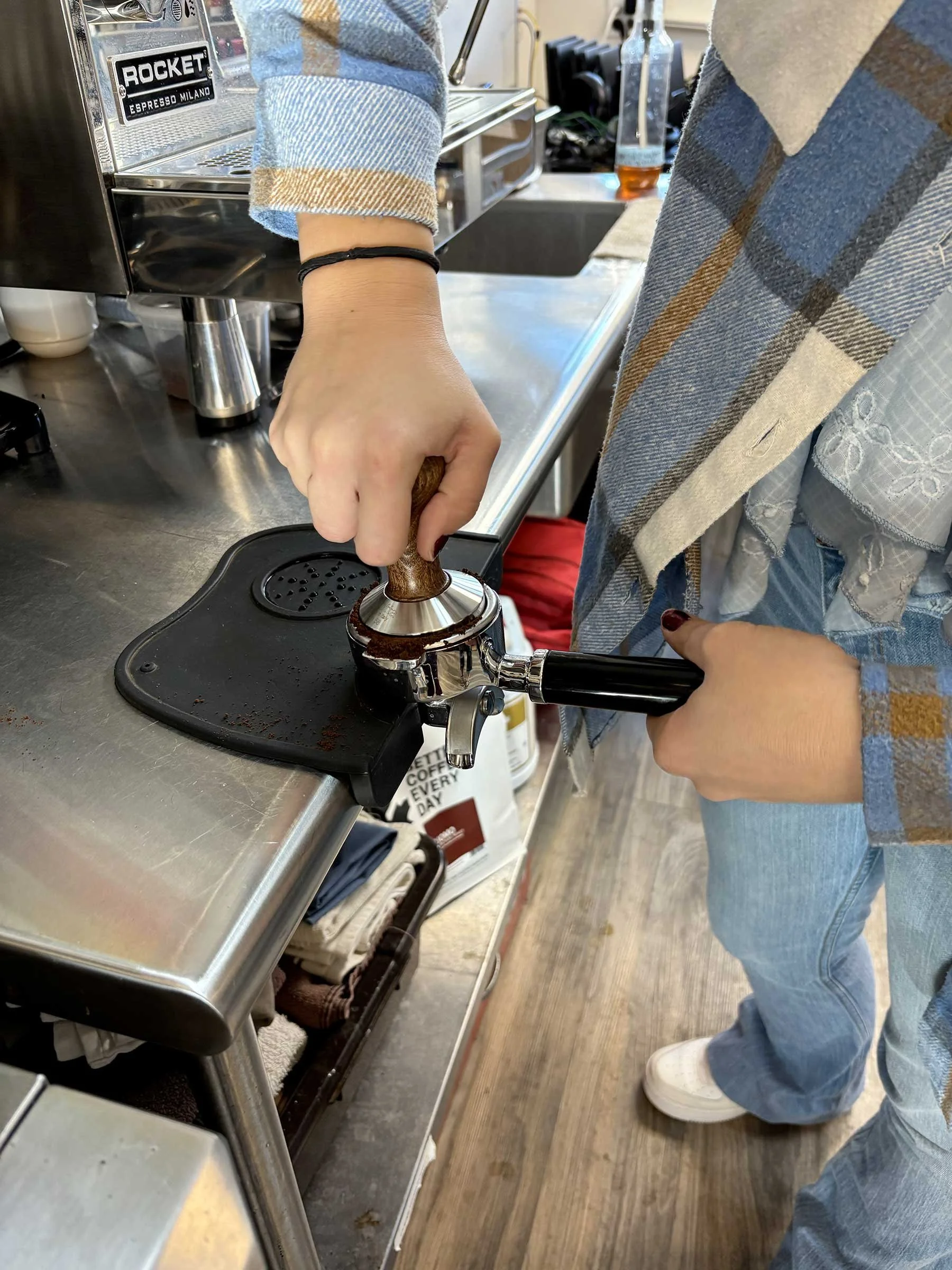
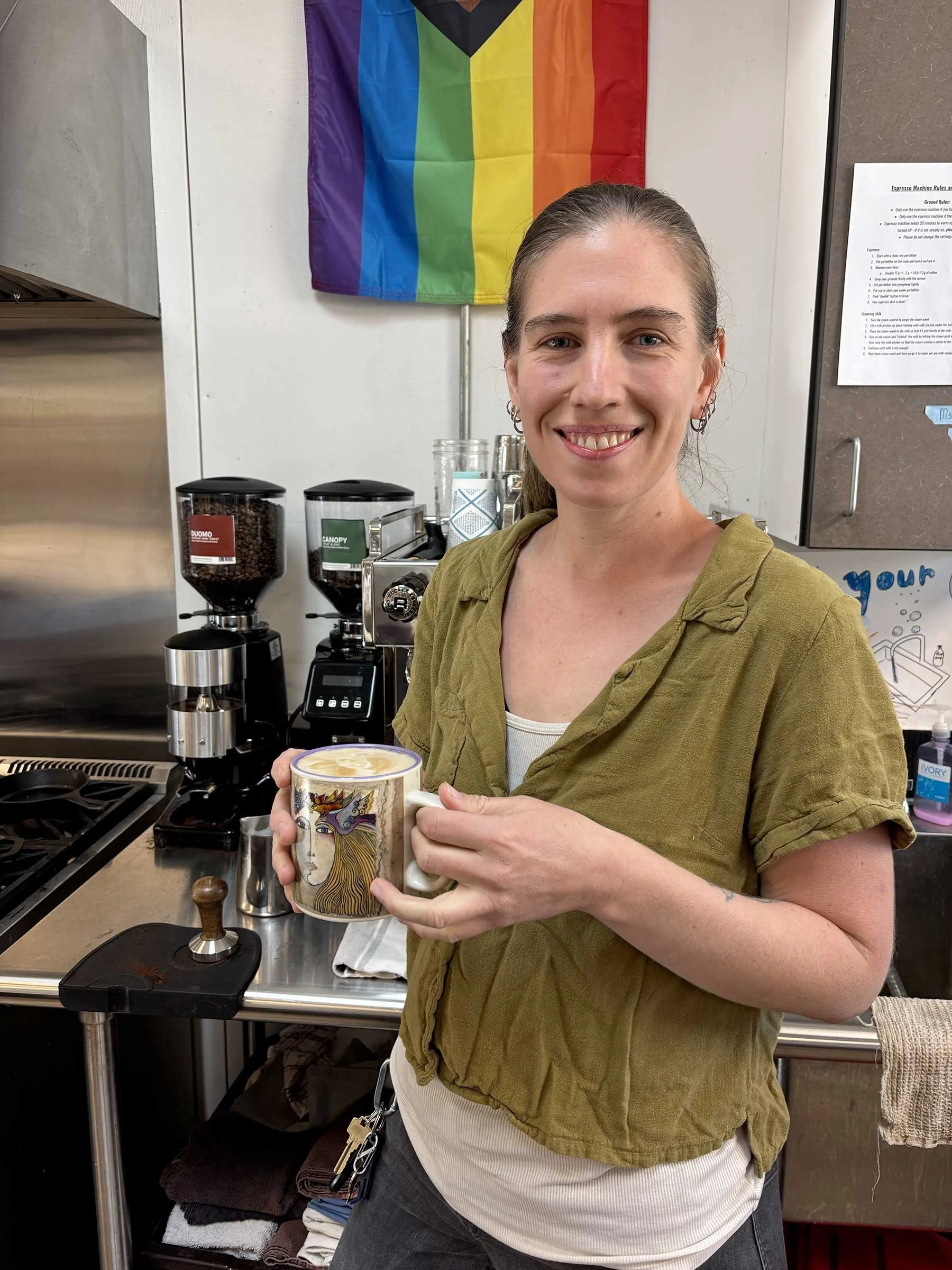
Through Black Oak Coffee Roasters, Lindsay was able to get a window into the high-end coffee world. The company has won numerous awards in the industry, including for coffee tasting, and former staff have successful careers in the coffee field. Stepping back, Lindsay remembers, “We sort of stumbled into this thing, but it ended up exceeding my expectations. They helped guide me through the process, and they will help with service and maintenance when we need it. And I love that they are local. We are able to buy our coffee from them as well.”
Lindsay appreciates that there was never any judgment from the pros, and they were able to meet the students at their own level. A recent visit from local barista Jamin Sangster gave students an introduction to latte art— the pretty patterns one can create when pouring white steamed milk into coffee or espresso.
Instructors understand that, for the most part, students just want to make the coffee, but they were able to introduce a little bit of the bigger picture about sourcing and quality. “We did some tasting, and almost all of the kids balked… ‘Tasting espresso without sugar? What? No way!’ But they did it and were game. The ones who were into it, got a lot out of it. And if they leave being confident enough to say, ‘Oh yeah, I know how to make good coffee, I know what all these parts are. I can do a latte.’ … That confidence goes a long way,” Lindsay adds.
One student named Tiffany remarks on the program, “I like that we get trained to use it and get to practice making coffee for ourselves and our friends.” Her cohort Miles echoes the positive opinion, “I just think it’s cool that we have the opportunity to learn how to use an espresso machine. It is really good work experience!”
Laytonville High School excels in making the Work Experience Pathways fun and dynamic while exposing students to all sorts of careers and specialties. Todd Adams, a science teacher and the garden instructor, supplies a lot of fresh produce to the culinary and the school lunch programs. Students learn how to grow their own food and then how to prepare it. The school was recently awarded a Climate Change Adaptation Grant in partnership with North Coast Opportunities. The program brings students to tour Laytonville farms, including Mulligan Gardens, Irene’s Garden, and Happy Day Farms (run by former garden instructor Casey O’Neil). After the tours, those same farmers will come talk to the students in the classroom.
The culinary program sources locally grown produce through the Mendo Lake Food Hub (a program of NCO) as well. “Working with the farms, we can take their excess produce and make a dish that specifically uses those crops. The students learn how to prepare their own meals and how to work in a restaurant setting.”
Reflecting on the program, Lindsay can’t help but smile. “We now have a former student working at Black Oak in Ukiah. I’m just really glad that we were able to make this connection locally and that it gives our students the skills and confidence to get a job on their own terms.”
Holly Madrigal is a Mendocino County maven who loves to share the delights of our region. She takes great joy in publishing this magazine.
Photos by Lindsay Hansen