WWOOFing It
Traveling the World, Farm to Farm
by Terry Ryder Sites
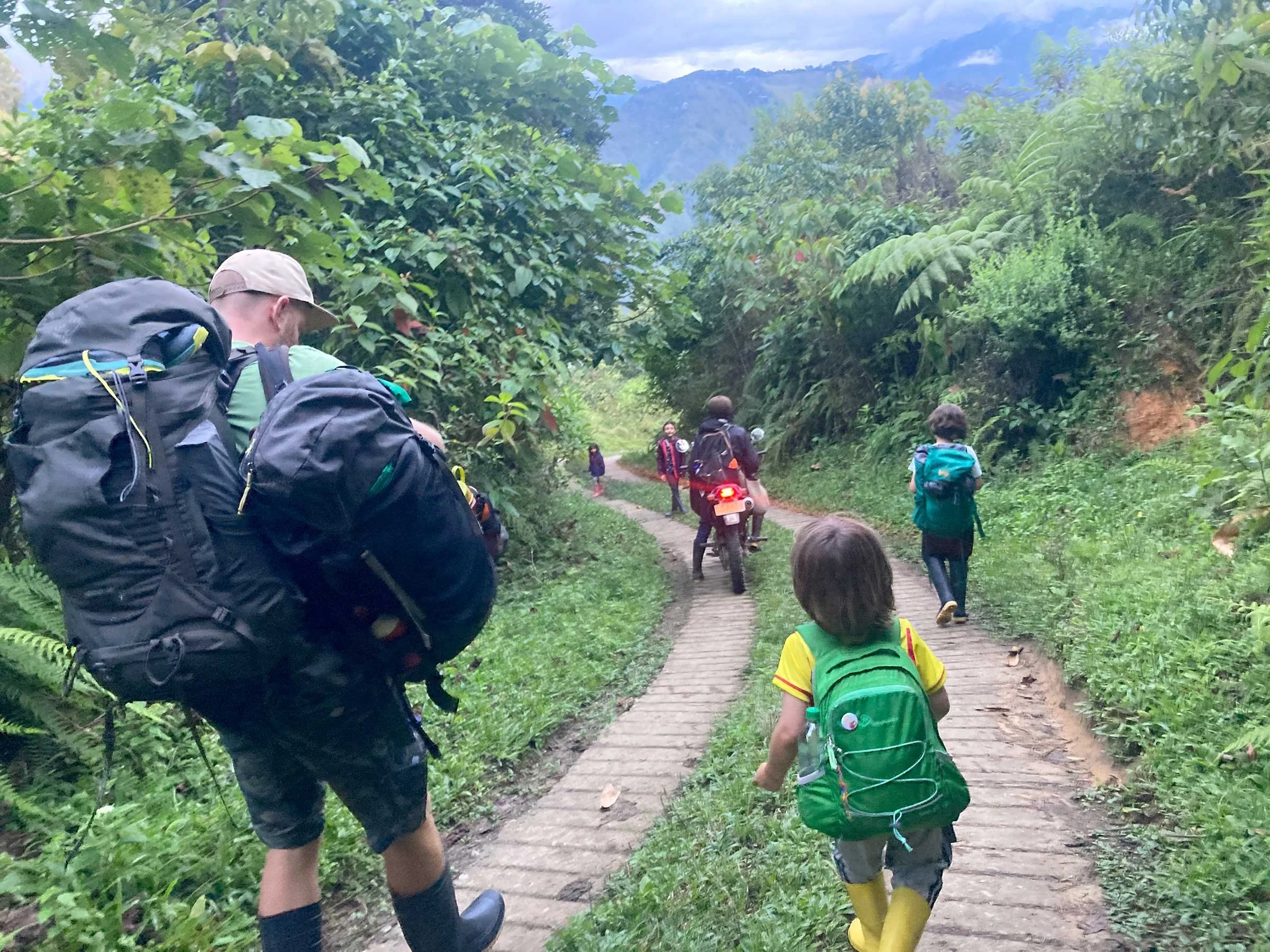
Nat, Noor, and their boys trek to the WWOOF host farm in Colombia.
Everyone has probably had the fantasy of just picking up and heading out, leaving the familiar behind. How great would it be to go away somewhere new, to get grounded and consider your options? Of course, there are many obstacles to such a plan, which is why most people never get beyond the fantasy. The logistics are formidable and the expense considerable.
What if there was a way to accomplish this “time out” that was relatively simple? By joining a program called WWOOF (Worldwide Opportunities on Organic Farms), a good number of people have. Singles, couples, and families are all eligible. The hosts provide education, meals, and housing, while the WWOOFers provide work in return. No money is exchanged. There are both national and international hosts so you can stay close to home or travel the world. You are responsible for your own travel arrangements and expenses so it is important to be prepared financially. You will need to apply for a visa for international placements. Once you arrive at your destination, your daily needs for food and shelter are provided by your host.
Each placement is unique, so it is important to do your research before choosing your destination. The more clearly you communicate your needs and expectations to prospective hosts, the more likely it will be a successful match. If you are interested in organic agriculture, you’re a natural candidate. Keep in mind that the host farms need your labor. A solid work ethic on your part is absolutely necessary. The work can be hard, so you must be prepared to put your shoulder to the wheel.
The program started in the UK in 1971, just as interest in growing one’s own food was on the rise. Sue Coppard, a secretary in London, felt the need to connect with the countryside. At first she organized weekend work parties at a farm outside the city, but soon longer stays were requested and accommodated. Today there are independent WWOOF organizations all over the world, each with their own way of operating. There is a modest registration fee that varies depending on the country. An online newsletter keeps members updated and informed.
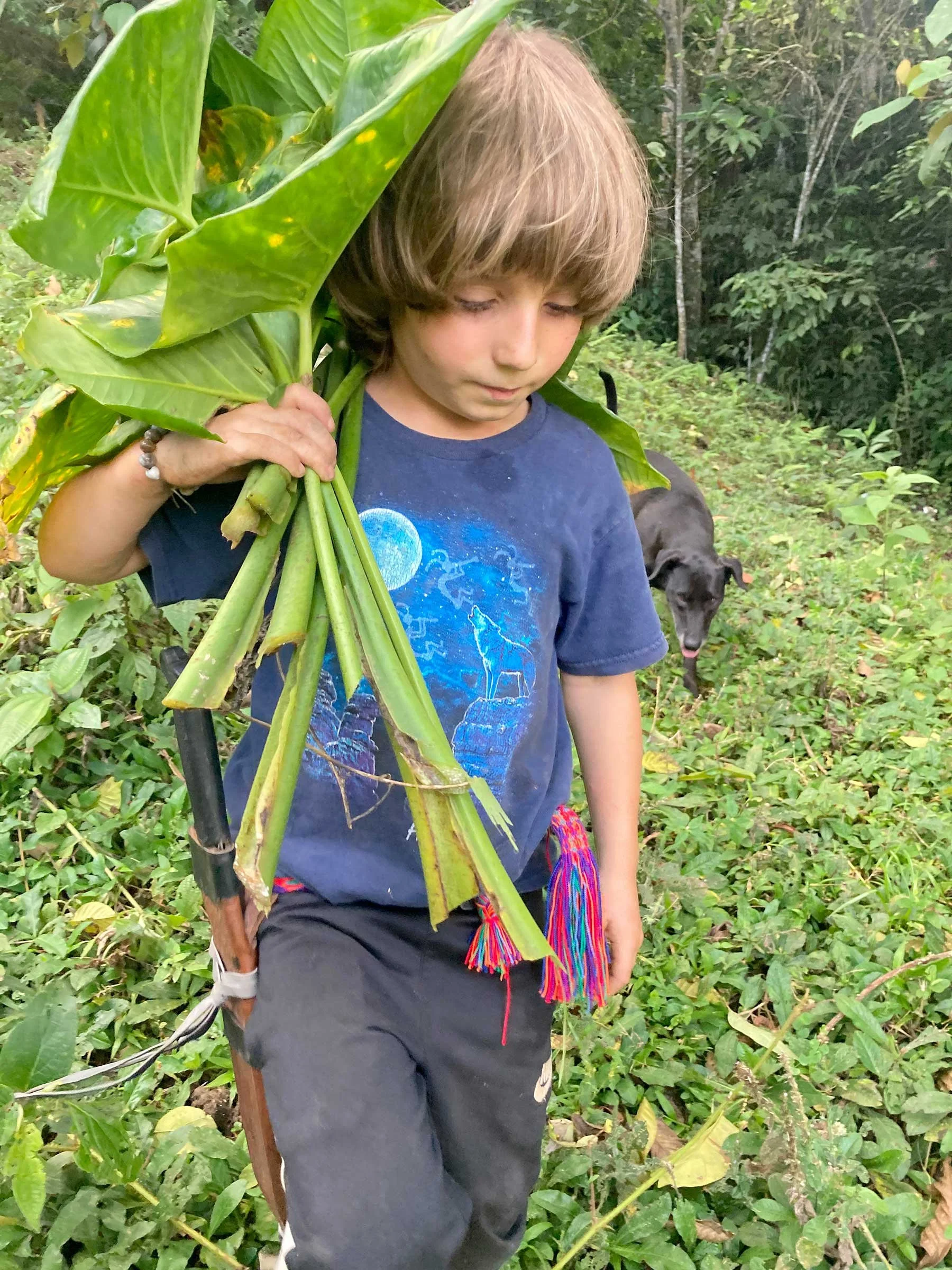
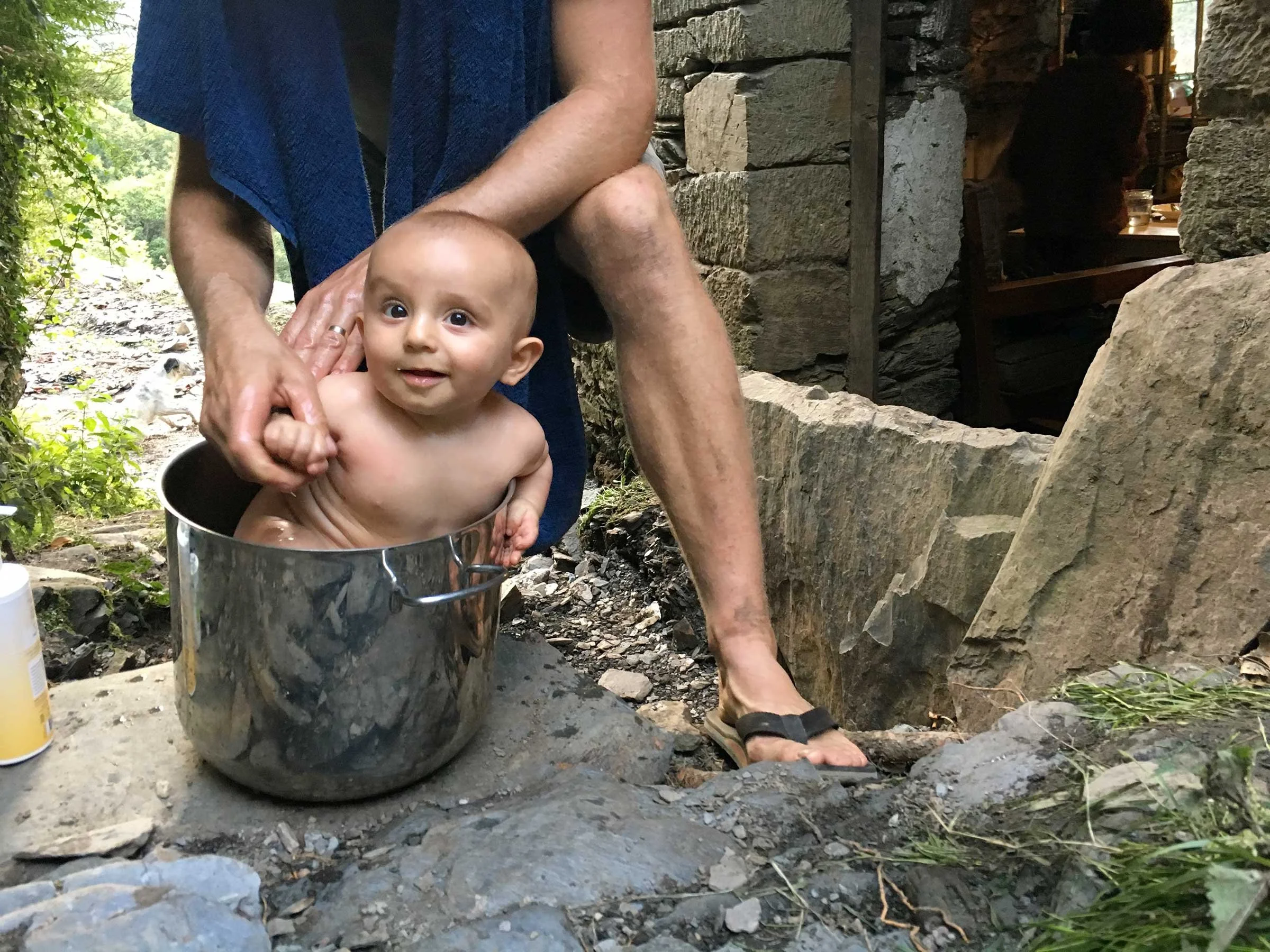
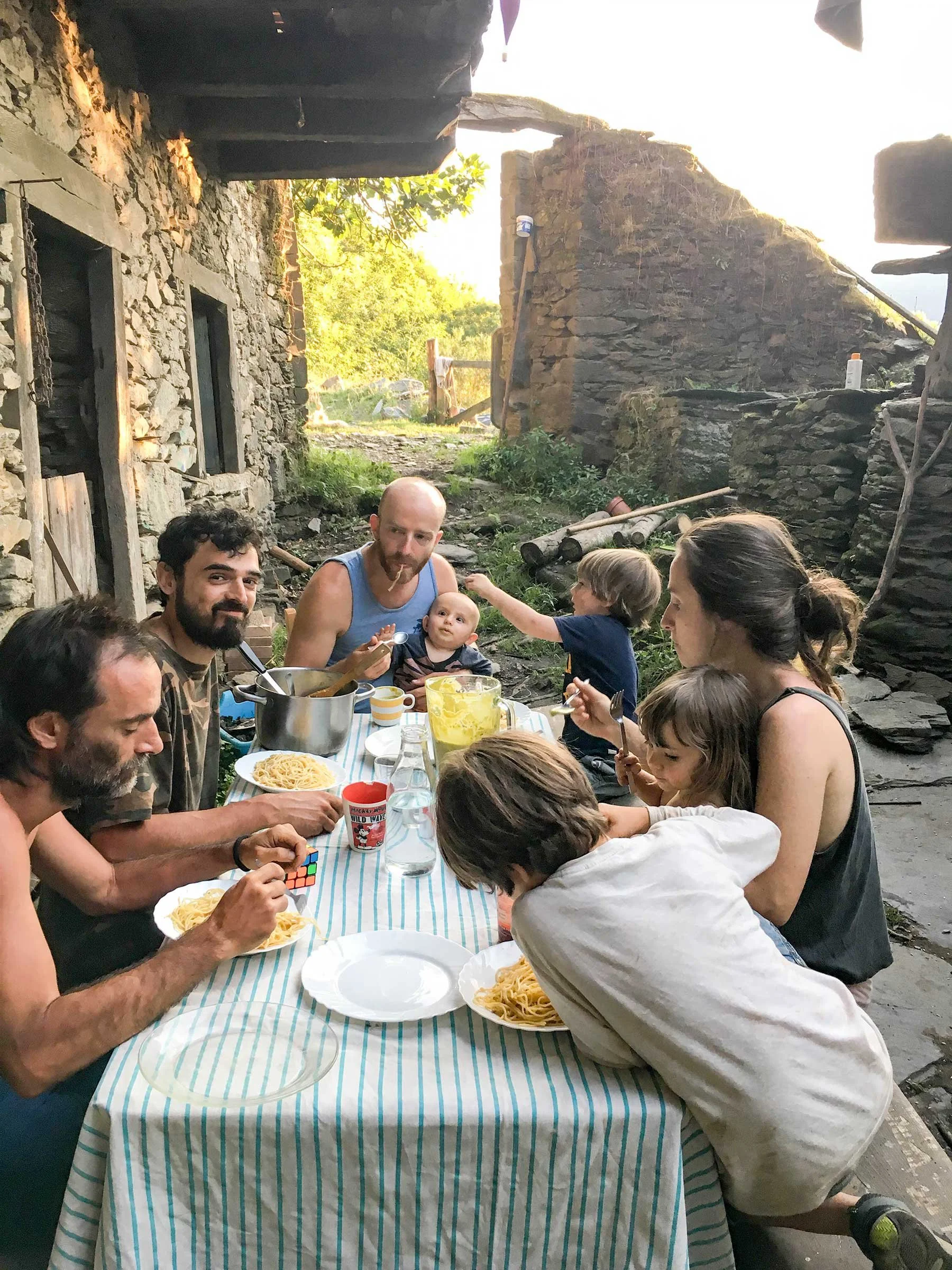
Noor Dawood and Nat Corey-Moran are both Anderson Valley teachers who have gone WWOOFing with their two young sons. They feel that family participation works best if the host family also has children so childcare can be shared. In Colombia they helped build houses using native bamboo and clay. Noor shared, “It was a unique way to experience day-to-day life from a broader perspective … to connect with other people and cultures.” They brought home wonderful recipes and memories. “Overall I think the most meaningful and memorable experiences of WWOOFing for us centered on good conversation over long, delicious meals,” she concluded.
Lots of communication with their hosts over WhatsApp helped them find the small family farmsteads they were looking for. When WWOOFing in Galicia, Spain, Nat took a memorable predawn trip to a potato field with a team of locals who turned out potatoes together as the sun rose.
Interestingly, Noor found it easier to WWOOF when her kids were very little (6 months and 3 ½ years) than later when they were older, shyer, and more aware of the language gap. Noor described the mixture of working hard, sharing philosophies, and delighting in the unexpected. After a long hike to gather and bundle dry brush to burn in the village baking oven, neighbors appeared—one with a bagpipe. Their host pulled out his flute and they were serenaded as they worked.
Small family homesteads are one way to go, but single people might prefer larger operations that bring on a group of WWOOFers. This set-up often appeals to younger folks looking to work, live, and share meals together. Rose Flanigan, who used to work at Paysanne in Boonville, was kind enough to get on a video call from her current location of Oxford University. I could see a great hall with soaring columns in the background. Rose was 19 in 2011 when she came to Boonville from Chicago, seeking the rural lifestyle. While working with Tim Ward, Renee Wilson, and Alice Woelfle at the Anderson Valley Community Farm, she learned firsthand what it means to “go back to the land.”
A very game participant, she lived at different times in a tent, a bakery truck, and a camper van. She says, “I found it to be a great opportunity when I was young and exploring. It challenged my perceptions of the world, and I met a lot of people. I’m really glad I did it.” Rose went on to WWOOF in Vermont and Maine, ultimately spending 4 years in Nepal before ending up at Oxford, where she is studying disability history.
Mary Pat Palmer recalled how rejuvenating it was to have young people in their late teens and early twenties around. The opportunity she offered—working and learning at her Philo School of Herbal Energetics—was a popular one, so she had lots of applicants. Her property included a separate building where her workers could live, cook, and enjoy each other’s company. This independence suited her and her crew. She points out that not every good worker is someone you would enjoy living in the same house with. Her volunteers stayed anywhere from a few weeks to a couple of years. She told me, “I was so grateful for all the help I got and for the people I met.”
No matter what your age or circumstance, if the chance to get your hands in the soil and take stock of your life appeals to you, WWOOFing might be just the thing. At the end of the day all you really need is good health and a good work ethic, and you’re ready to go.
Find out more at wwoofusa.org
Terry Ryder Sites lives in Yorkville with 4 cats and 1 husband. She is a graduate of Ringling Brothers Barnum and Bailey Clown College, and until recently, she wrote a weekly column for the Anderson Valley Advertiser.
Photos by Noor Dawood