Réttir
Iceland’s Annual Sheep-Sorting Tradition
by Torrey Douglass
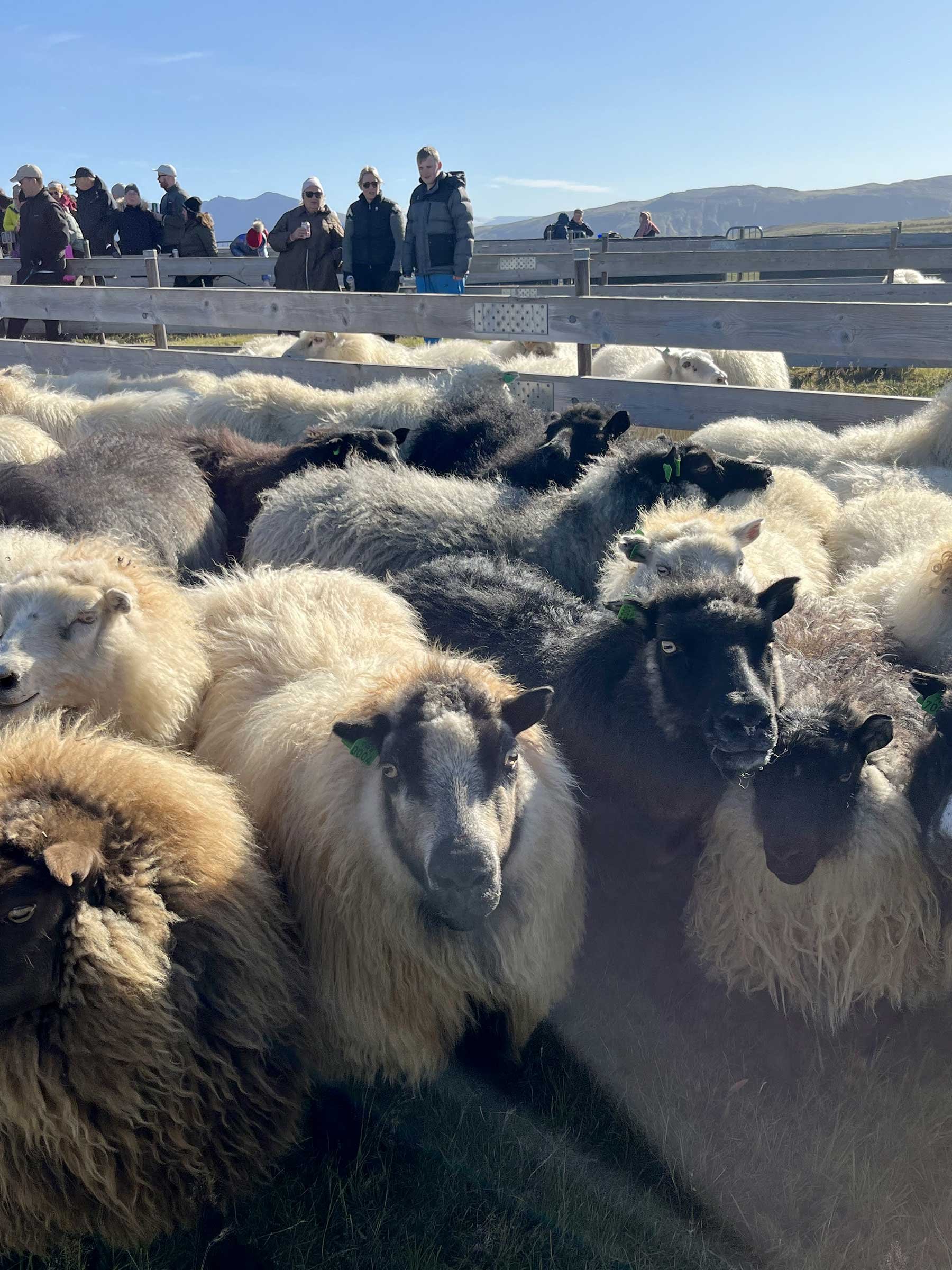
Icelandic Sheep during réttir
Ten years ago, Ruthie King was working at the School of Adaptive Agriculture on Ridgewood Ranch outside of Willits where students gained a variety of farming skills through the school’s programs. While they had cows on the property to demonstrate how to raise livestock, Ruthie had been keeping an eye out for another species to add to the curriculum. That species came in the form of a generous gift from Gowan Batist of Fortunate Farm—two Icelandic sheep named Heklan and Gowa. They belonged to a species of sheep that’s been largely unchanged since the year 900, and one that would become the focal point of Ruthie‘s career and win a place in her heart forever.
Icelandic sheep are raised for their meat, milk, and fleece. “They have the most stunning, beautiful wool of any sheep in the world,“ Ruthie says with affection. The wool actually has two layers—a coarser topcoat and a softer undercoat, which is prized by craftspeople and used for Iceland’s famous sweaters. Ruthie’s business, Headwaters Grazing, at first raised and sold sheep for both fleece and meat. Yet it was not until she integrated an additional aspect of the breed—their excellent grazing abilities—that the venture became sustainable.
To understand why Icelandic sheep are so well adapted at grazing—also known as fire fuel reduction in these parts—take a look at their history. Vikings brought the species to Iceland in the ninth and 10th centuries. While other modern breeds have been hybridized and modernized to maximize their size for meat, Icelandic sheep have kept true to their original form, genetically changing very little over the centuries. Known as an ancestral breed,“They are as close to wild sheep as we get,” according to Ruthie. There was not a lot of human intervention in their lives back in the year 900, and as a result, they have evolved to be exceptionally hardy, independent, and resilient.
So while other types of sheep eat grass exclusively, Icelandic sheep will also eat brush, blackberries, poison oak, and a whole host of brushy, flammable plants that grow on the hills of Mendocino County. They turn dry fire fuels into bioavailable, non-flammable pellets that benefit the soil. And they do it without fossil fuels and in harmony with the other animals living in the grasslands, in contrast to mechanical measures, which can kill snakes, rodents, and other creatures living in the grasses and brush.
Part of the breed’s independence is their ability to birth and care for their lambs without help from humans. It’s one reason that sheep farmers in their native Iceland feel comfortable releasing all of their herds into the hills at the center of the island during the summer. There are no predators, so the sheep roam freely, eating lichen off the volcanic rocks and other plants, raising their babies, and essentially living their best lives during the long Icelandic summer days.
In the fall, every Icelandic sheep farm is responsible for sending at least one person out to help bring the animals back to the coastline where the farms are located. The process, called gongur, lasts a week or more. Folks head into the hills on horseback or on foot, camping at night and hiking during the day, shooing any sheep they find down towards the coast. It’s important to know that the sheep seekers are not looking for animals from their own particular farm. Rather, they are looking for any and all sheep roaming the interior of the island.
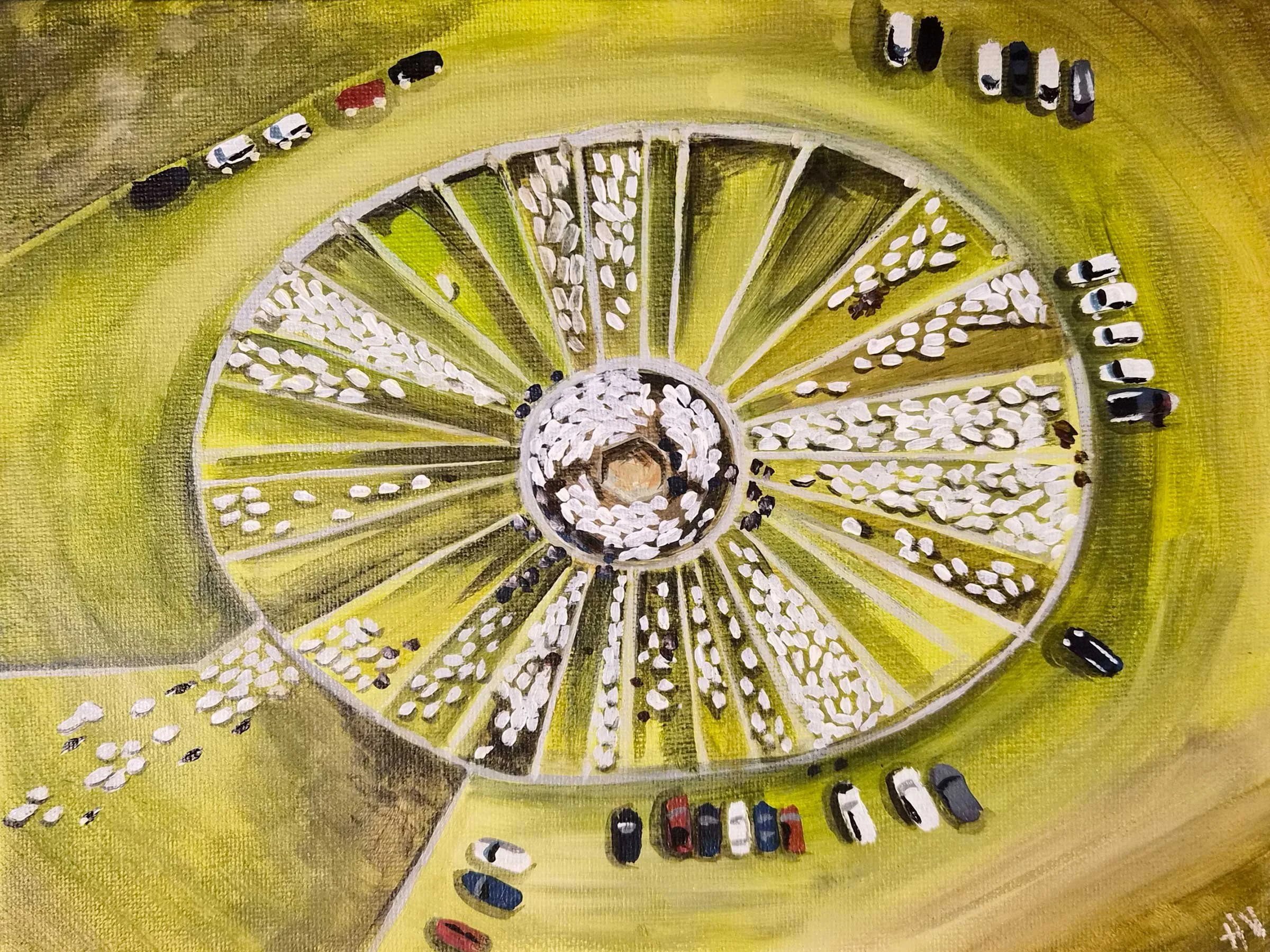
Corrals can be found in every farming community along the coast. These structures feature a large central pen with separate pens radiating out from it like spokes on a wheel. The sheep are collected in the central pen, then the farming families in each area gather to help sort the animals into their respective herds. A “small” herd can be 200 sheep, and a typical herd can count 700. The annual sorting process, known as réttir, is a textbook example of the saying, “many hands make light work.”

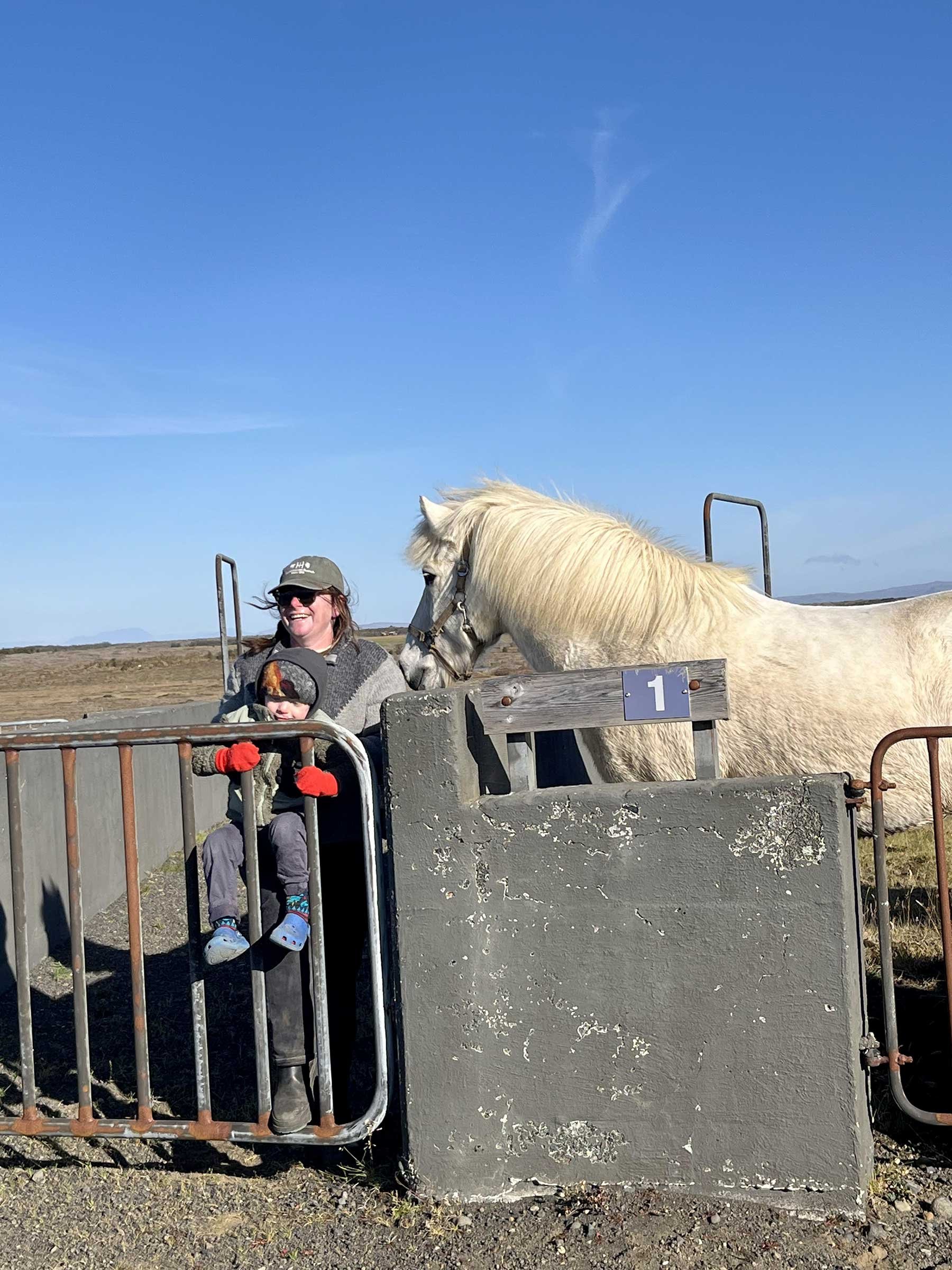
Attending réttir has been on Ruthie‘s bucket list for a number of years, but it never seemed like the right time. She had a son in 2022 and the demands of running a business, caring for her family, and living as part of the Ridgewood Ranch community left little time for a trip to Iceland. Then, last winter, Ruthie and her husband were delighted to learn their family was about to grow again. But hope turned to heartbreak a few months later when the pregnancy took a tragic turn. A wise friend advised Ruthie to plan something special around the time they would have welcomed their new baby into the world, and a réttir expedition was put in motion.
Iceland has a robust tourism industry, but the primary attractions are hot springs, hiking, and the stunning scenery. So the Icelanders responded with friendly confusion when Ruthie and her family appeared at one of the réttir events. “It took a lot of courage to try to find them,“ Ruthie remembers. “We arranged the trip to try to go to as many as we could. We got lucky so many times. Like how most people in Iceland speak English. They were so fascinated that we had Icelandic sheep in California, both proud and confused. Most farmers are used to tourists, but not used to sheep pulling in those tourists.”
The réttir gatherings are not listed online. Instead, a free agricultural newspaper available at gas stations includes a map of the whole country with dots and dates marking the time and location of each event.
The first réttir they went to took place in a beautiful valley. They had met a farming family the night before who shared a spread of Icelandic donuts and smoked leg of lamb prepared for returning sheep-seekers. “I was not sure at first if it was appropriate to ask to help, even though I wanted to,” says Ruthie. “But they were funny and sweet and appreciative. Lots of farmers are aging and, similar to here, their kids don’t want to take over. And the sheep are physically difficult to catch.”
Following the réttir, tired but satisfied, everyone got together for coffee and pastries. “We don’t sing and drink in this valley,“ one of the Icelanders informed Ruthie. These post-réttir gatherings are called rétt balls. Some are family friendly, with kids running around and festive music. Another was more simple, consisting of a posse of 20-year-old men hanging out and drinking beer in a living room.
Throughout their trip, Ruthie, her husband, their three- year-old son, and her mother and sister managed to attend five out of about 40 events. At every one, Ruthie asked to see the herd’s leader sheep. Leader sheep are a unique sub-breed known for their ability to read weather and their impressive intelligence. Out in the wild, they protect the rest of the group, leading them to sheltered areas when storms are about to blow through. Their intelligence can be intimidating. “They look you in the eyes, they walk the perimeter—it’s a little unsettling,“ Ruthie says.
Réttir can only happen in Iceland, where the traditions, infrastructure, and predator-free ecosystem make it all possible. “It’s inspiring, though there is so much we can’t replicate,“ Ruthie observes. “But the coming together and community building around sheep work is something we can do.” With that in mind, Ridgewood Ranch is hosting a Flock Together festival on April 25, 2026, centered around the spring shearing. It’s a chance to celebrate an abundant harvest of wool, to come together in community and make the work light thanks to many hands.
Learn more about Headwaters Grazing at headwatersgrazing.com.
Torrey Douglass is a web and graphic designer living in Boonville. When she’s not at work you ca find her escaping into a good book.
Photos courtesy of Ruthie King.