Folk Life Farm
Growing Family, Growing Food, and Feeding Community
by Torrey Douglass • photos by Joyce Perlman
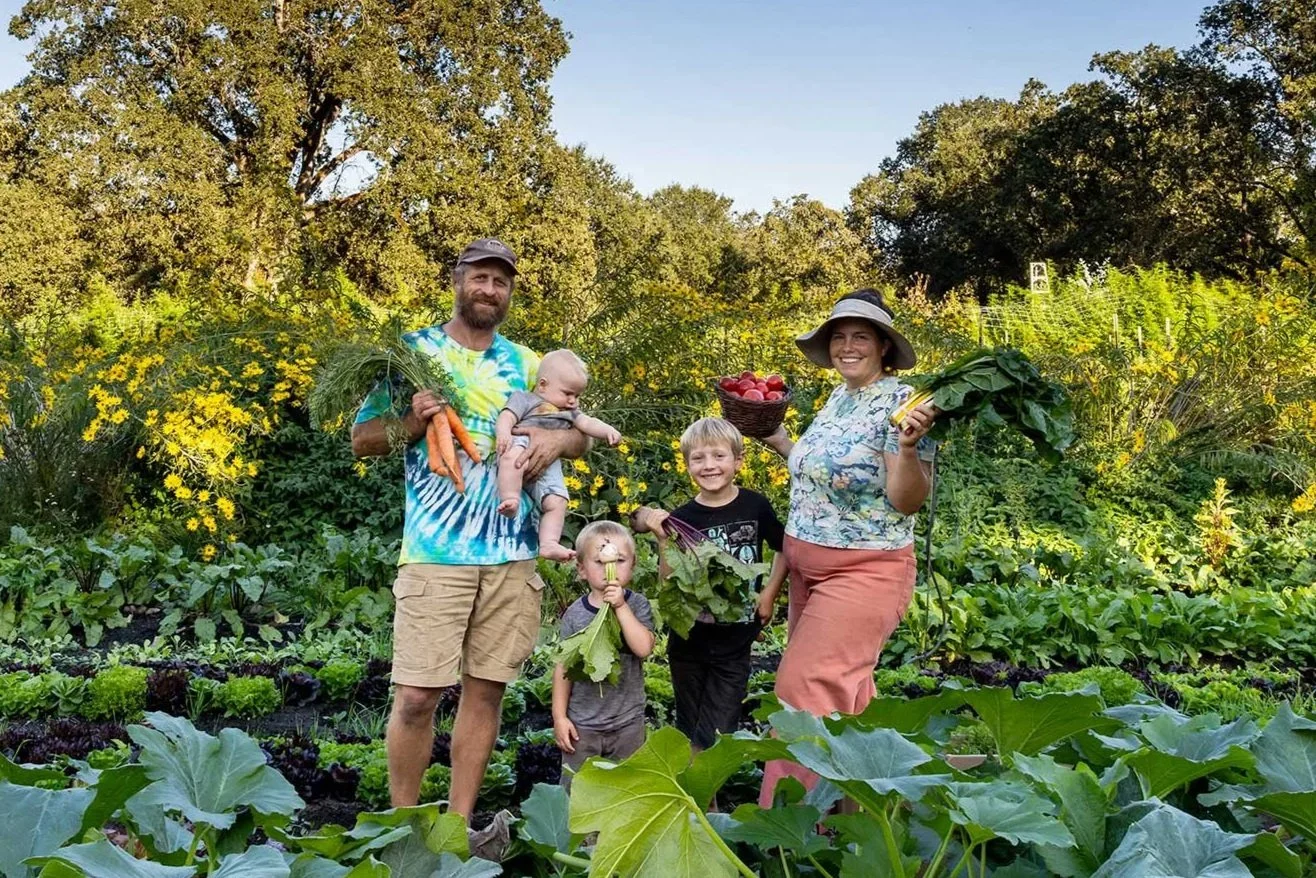
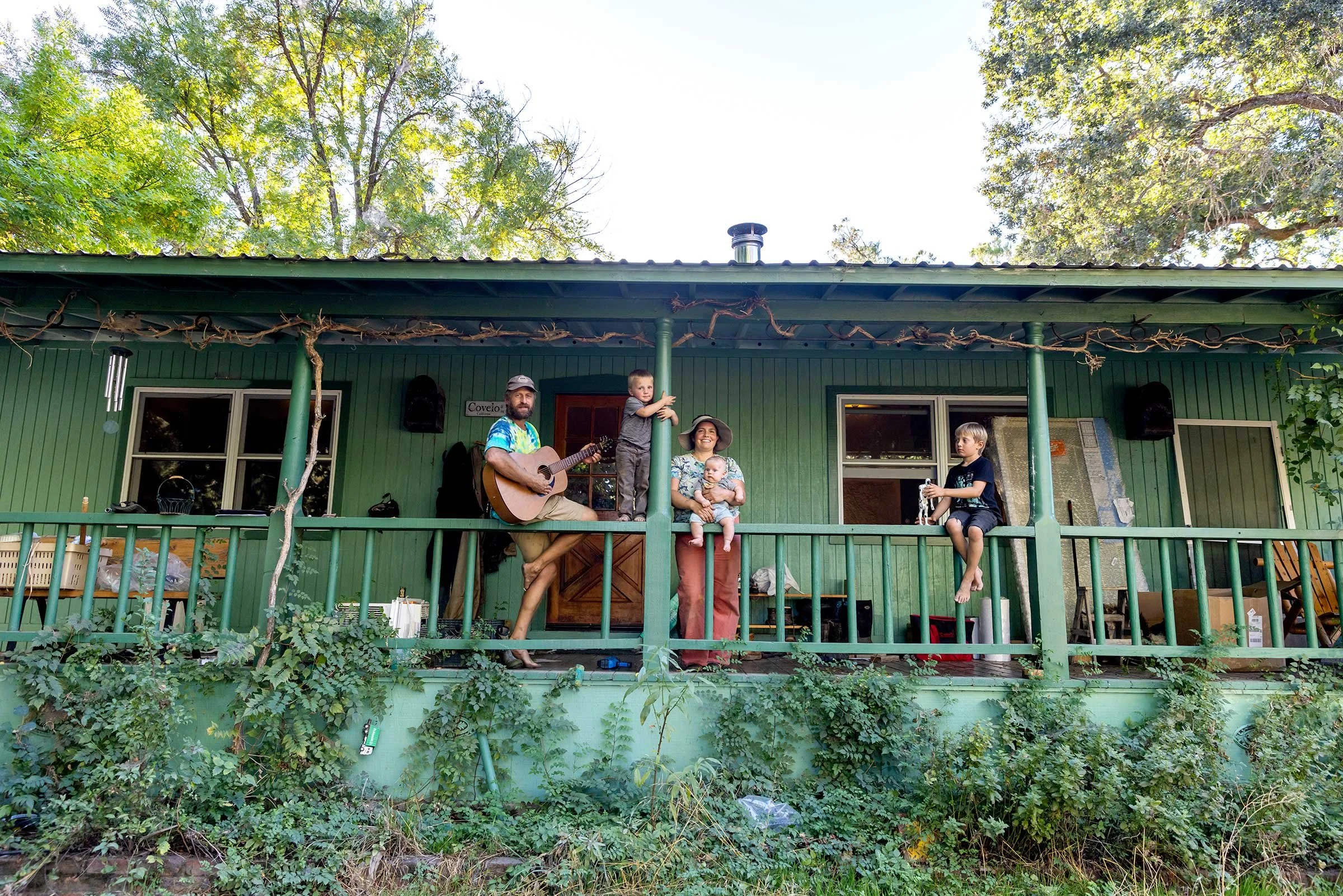
The AuClair family on their farm
There’s a Venn diagram with nature and sustainability in one circle, art and creativity in another, and nonstop problem-solving in the third. Smack dab in the middle where they overlap you will find Blaire AuClair, who farms Folk Life Farm beside her husband, Daniel, with their three young sons along for the ride.
You might not expect a Los Angeles native with a degree in fashion design to end up running a family farm outside of Covelo, but that urban childhood included camping vacations, a backyard garden, and a mom who always cooked from scratch. Studying fashion design led to a deep interest in the environmental impacts of GMO vs. organic cotton. It also gave her lots of practice in creative problem solving. As Blaire likes to say, “If you want to farm, you have to love problems.”
Blaire’s interest in sustainably produced textiles led her to become a WWOOFer (a volunteer with the organization Worldwide Opportunities on Organic Farms). What started as a two-month commitment turned into two and a half years, which led to another year apprenticing on a farm outside of Sacramento. “I’m a person who really likes to do things with my hands,” Blaire reflects. “I feel connected to craft work in that way. Farming gives me satisfaction in the physical work, and it’s also creative at the same time.”
Daniel grew up on the opposite coast in Massachusetts. His first solo agricultural project was the Rope Alley Urban Garden in Hudson at a home for people with special needs. Like Blaire, he apprenticed on a farm in Hawaii, though they were on different islands at the time. After interning at Live Power Farm for two years, Daniel stayed in the area, so when Blaire came to work at Live Power through a farm exchange, the two met and bonded over their shared love of scuba diving, growing food, and living lightly on the planet.
They’ve been together for 11 years now. “We make a really good team,” says Blaire. “I do the garden planning, behind-the-scenes computer work, kids, paperwork, harvest. I can hand kids off to Daniel while I go manage it all. He does bed prepping, transplanting, bed flipping—all the physical and rigorous stuff. He’s a tractor machine, and also an awesome dad.”
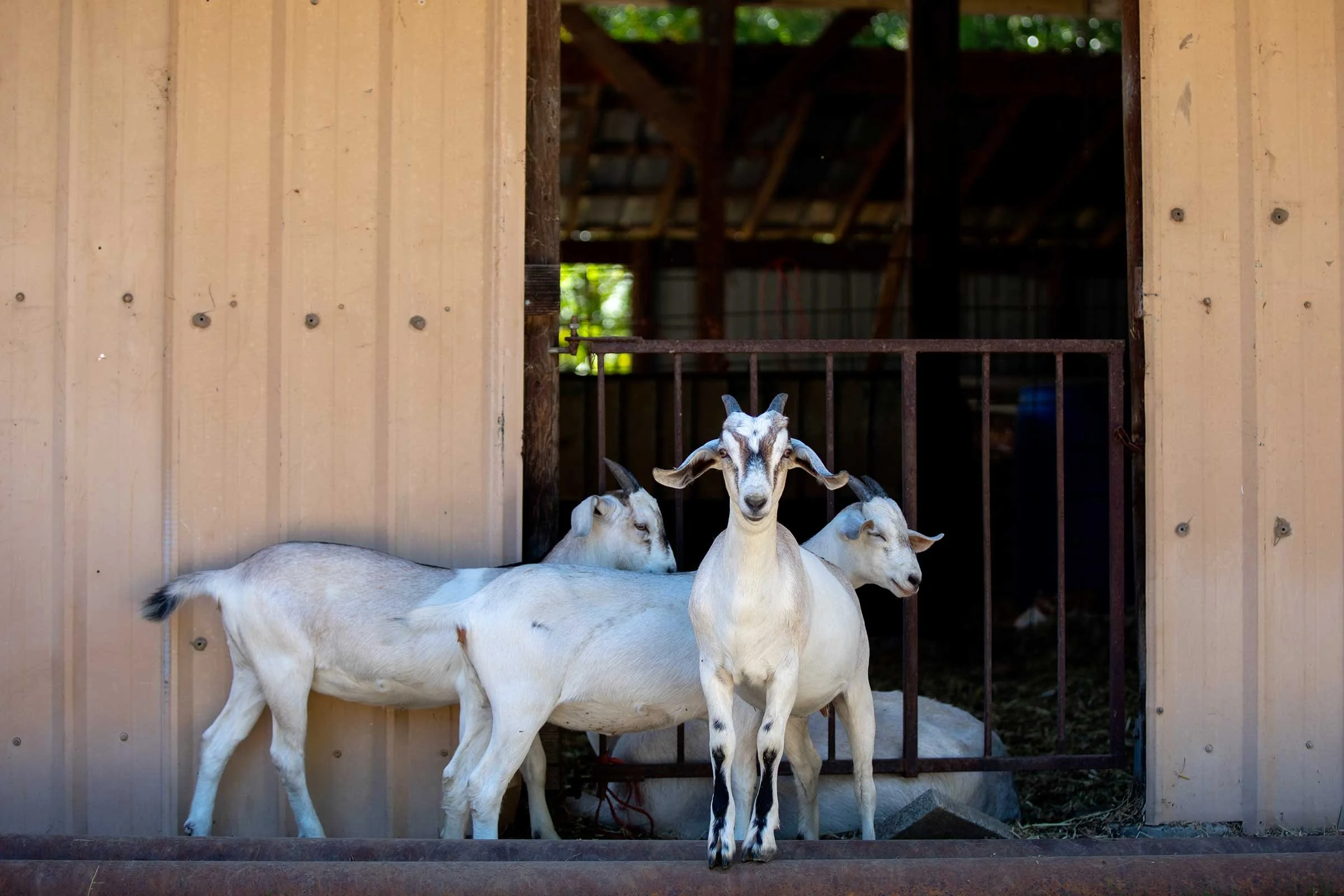
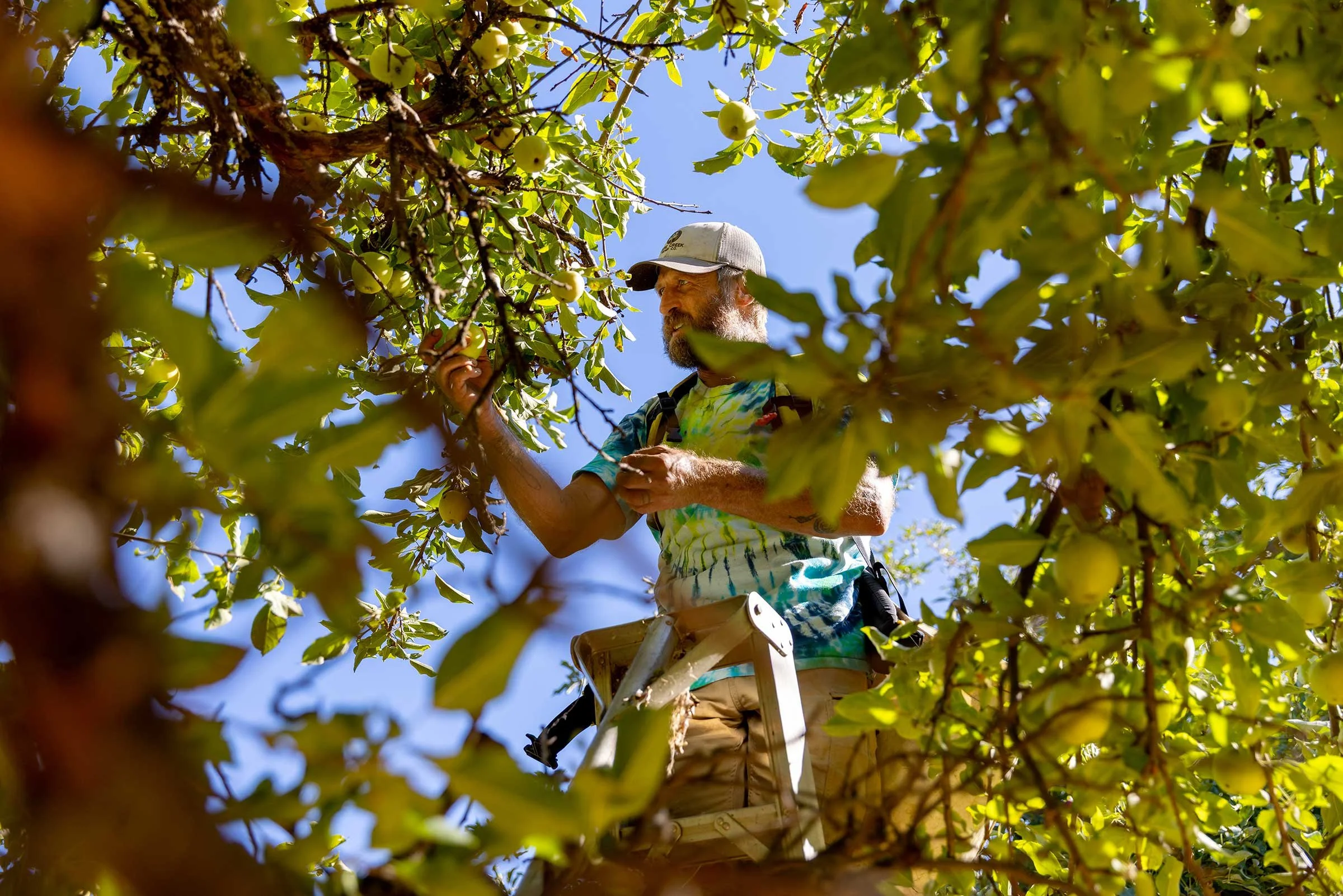
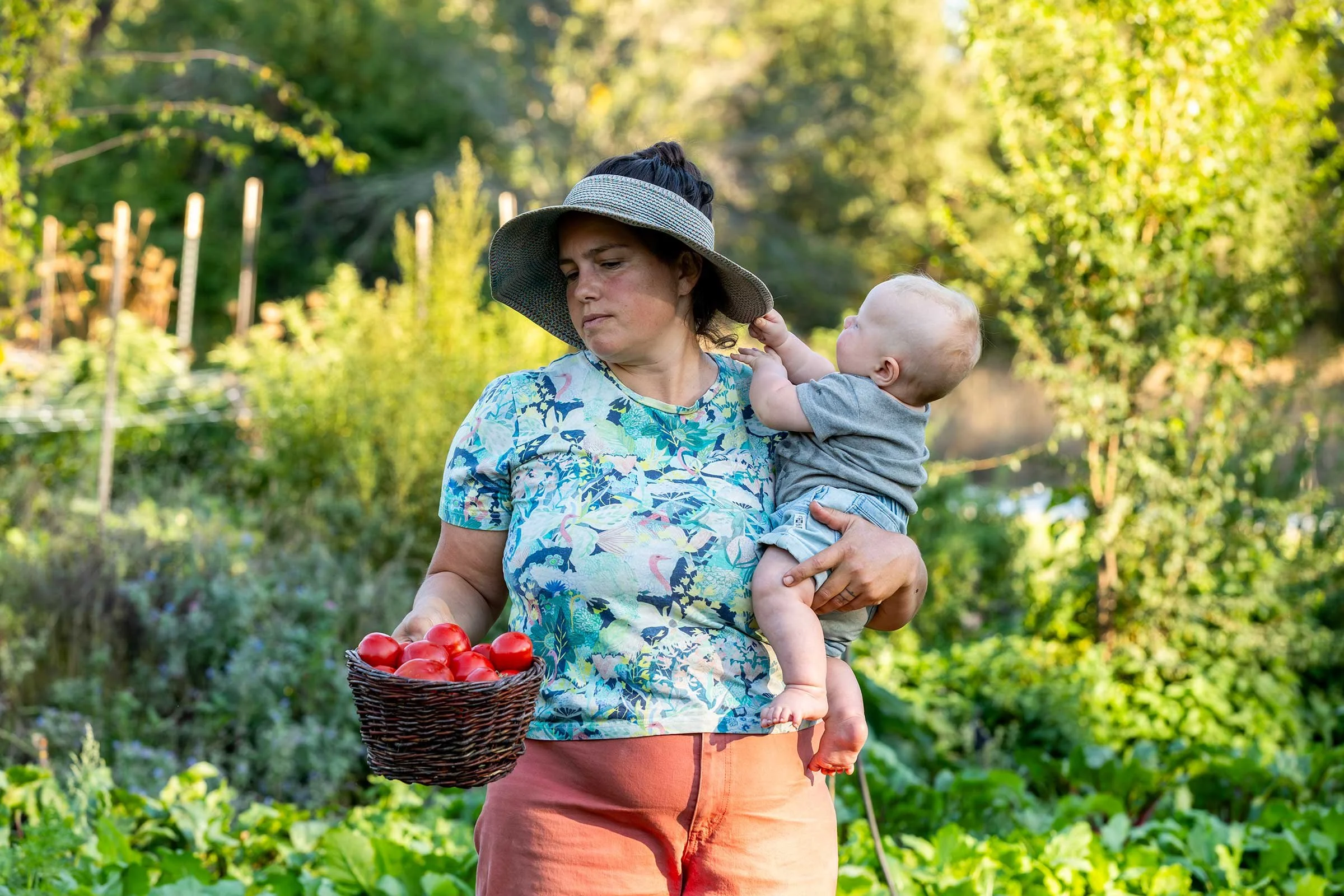
The pair are assisted by one full-time and two part-time workers. They produce an impressive amount of food for such a small workforce. They’ve been on the farm for 8 years. Currently, it includes an acre of vegetables, a quarter acre of cannabis, and a mix of livestock: 6 head of cattle, 8 sheep, chickens (egg layers for themselves and meat birds for market), pigs, and dairy goats. They grow all manner of herbs and greens, root vegetables, peppers, tomatoes, as well as bush and tree fruit. They also sell meat, plant starts, and herbal teas. They even grew ginger one year. Everything is grown regeneratively with “beyond organic” methods.
Farming regeneratively means looking at the farm’s health from the microbiological level (soil vitality) up to the big picture, considering the complex web of all living things on the property. Thanks to a grant from Point Blue, Blaire and Daniel will be getting a whole lot of pollinator plants in the ground over the next two years. These plants will grow into hedgerows and provide native habitat for pollinating insects and other wildlife, and also serve as a wind break.
Another project will restore the creek to its original, meandering form, prior to interventions from the Corps of Engineers. Diversifying plant life, encouraging pollinators, and allowing the waterway to flow naturally will facilitate the biodiversity that makes their farm healthy and resilient. Blaire has spotted all sorts of wildlife around the farm, including bobcats, elk, bear, foxes, bats, owls, snakes, and frogs. Property projects like these will help keep them around.
Even after a decade of farming, Blaire exudes enthusiasm when talking about her life’s work. “I love to eat. I love good food. I can’t imagine not growing my own food. I want to know where my food comes from. You can buy amazing things from the market, but when you grow it yourself, that is where the true magic really is.”
When it comes to selling their meat and produce, Blaire is a big fan of farmers markets. Due to the arrival of their third son in the spring, Folk Life Farm has skipped all but the local one in Covelo this past summer. Mariposa Market purchases a lot from them, as do Covelo’s restaurant and cafe, and sometimes the local supermarket. Their produce also makes its way to schools, food banks, and the Hub’s bounty boxes through the MendoLake Food Hub.
During the summer of 2025 the farm partnered with the Round Valley Indian Tribes to provide weekly bags of produce to tribal elders over a period of four months. A grant covered the cost of 50 bags per week, and a typical bag might contain cherry tomatoes, sweet peppers, carrots, cucumbers, and onions.
It’s no secret that the life of a farmer is hard, but that’s part of what she loves about it. “I think with vegetables and more so with flowers, I love the challenge,” Blaire says. “How difficult it is to grow each crop, each with its own specific needs. There’s no end to learning.”
The only moment when Blaire’s upbeat attitude dips is when she reflects on the mountains of regulatory paperwork involved in growing cannabis legally, which she describes as “difficult, annoying, horrible, horrendous.” She stays up late after the kids are in bed to wrangle her way through it, continually questioning whether it’s something they should keep pursuing or not.
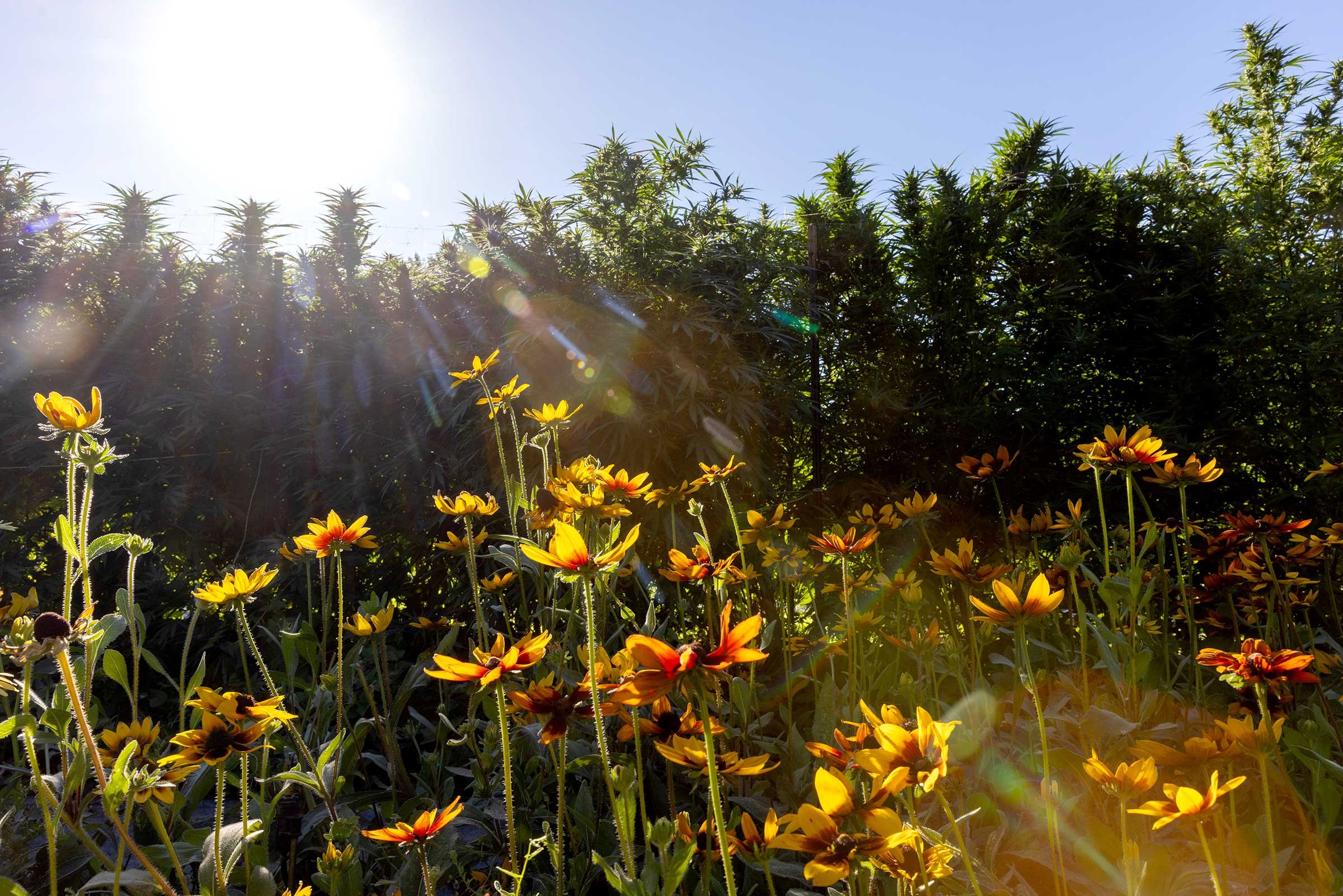
They have their own cannabis brand—Radicle Herbs—which they sell in over 40 retailers throughout California. In 2018, Folk Life won the Regenerative Farm Award at The Emerald Cup cannabis competition. “It’s a beautiful plant,” Blaire says. “There’s not a whole lot of it in the recreational market that’s clean and grown how we grow it. We feel like it’s important for us to keep putting that product out there.” They have a 10,000 square foot outdoor license. All the amendments come from the farm except for alfalfa hay they bring in. Blaire credits their lack of pest issues to the other crops grown nearby. “We’ve got cucumber beetles on the cucumbers and gophers eating the garlic,” she laughs.
A host of herbs and flowers are grown among the cannabis plants, including nettle, comfrey, calendula, and lemon balm. A few times a year they cut those down and leave them on the ground to decompose into the soil. In fall they add 1 foot of oak leaves and the alfalfa. In spring they muck out the barns and add the hay/manure mixture on top of the raised beds. With this approach their soil quality and by extension the quality of their crop has been increasing year over year.
It’s no easy thing to raise a trio of young children while running a farm, especially one where a diverse profusion of plants and creatures—both wild and domesticated—are coexisting. It’s a grueling amount of work and the problems are never-ending. But for a certain type of person—one who finds great satisfaction in everything from tending crops to planning the planting schedule to arranging vegetables into a beautiful display at the farmers market—the center of the Venn diagram can be the happiest place to be.
Find out more about Folk Life Farm at folklifefarmstead.com.
Joyce Perlman is a documentary photographer living on the coast. See more of her work at jperlmanphotography.com.
Torrey Douglass is a web and graphic designer living in Boonville. When she’s not at work you can find her escaping into a good book.