Cultivating History
Grace Hudson Museum’s Wild Gardens Celebrate 10 Years
by Alyssa Boge
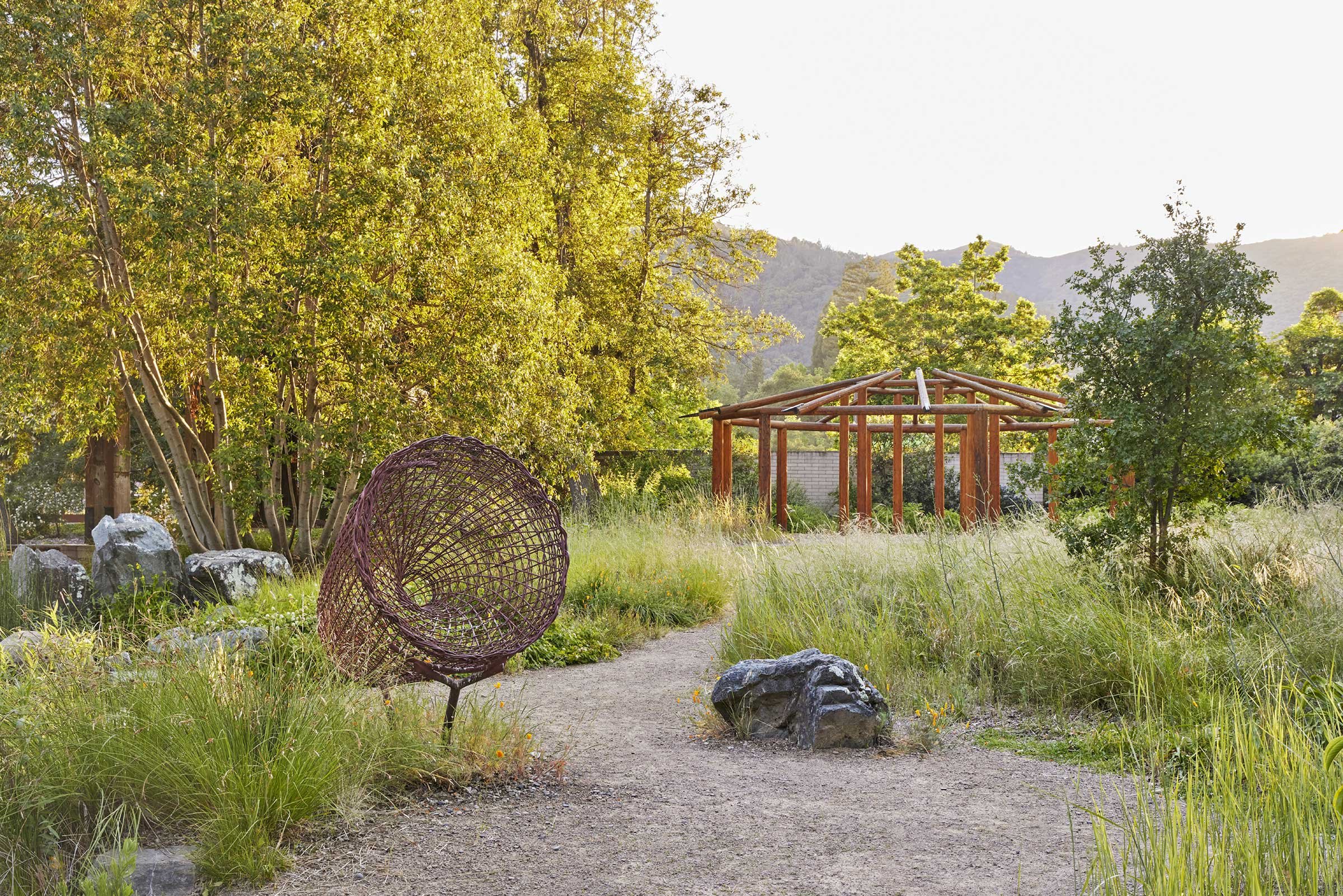
Grace Hudson Museum’s Wild Gardens, designed by Ann Baker
“My mother told me that we had many relatives and that we all had to live together. So we better learn how to get along... I found out from my older sister that Mother wasn’t just talking about Indians, but the plants, the animals, the birds, everything on this earth. They are our relatives, and we better know how to act around them or they will get after us.”
— Lucy Smith, from Taming the Wild
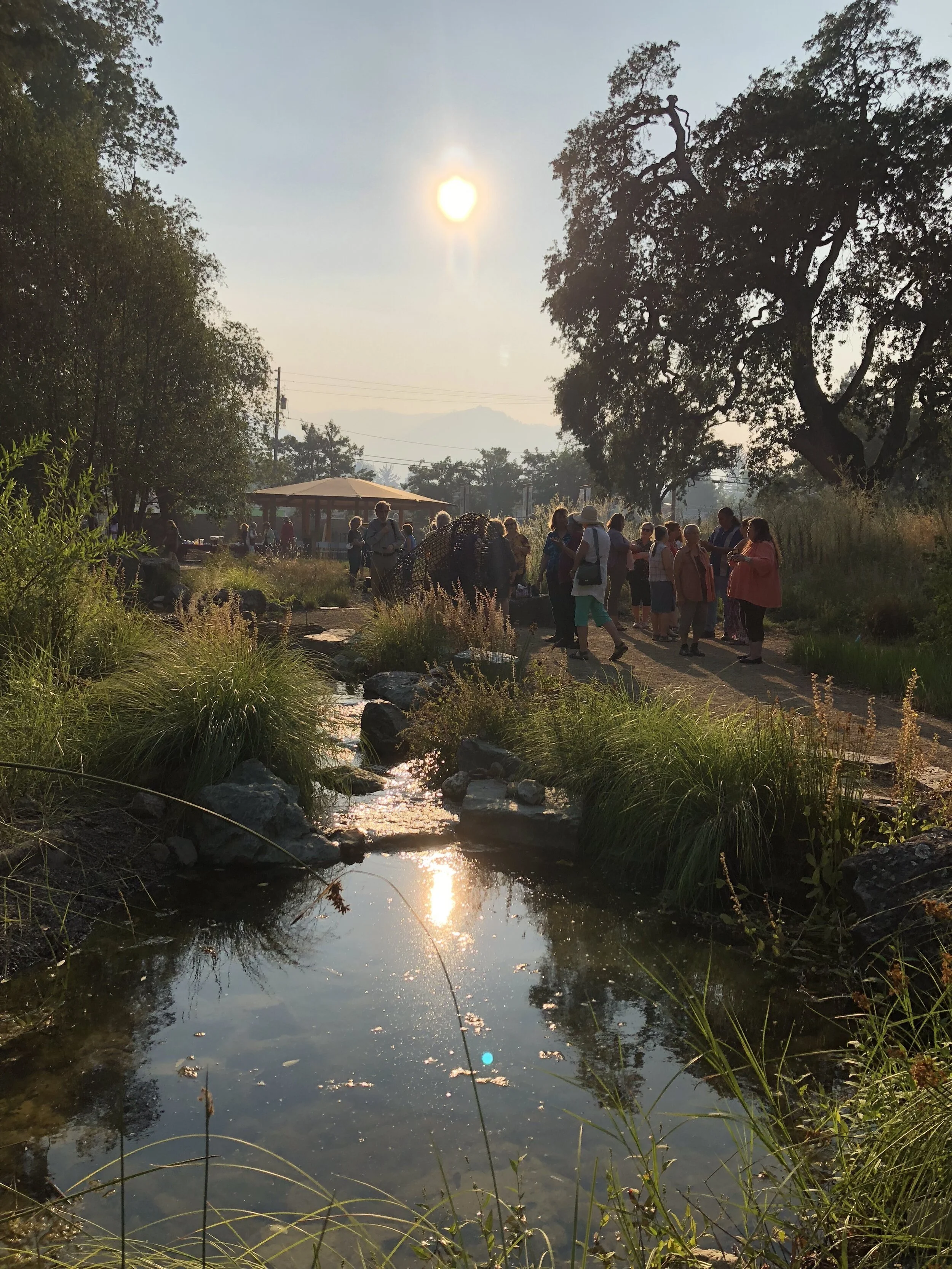
Lucy Smith’s granddaughter, cultural historian Sherrie Smith-Ferri (Dry Creek Rancheria), served as the Grace Hudson Museum’s director for over 20 years. During her tenure she oversaw the creation of the Wild Gardens, which opened to the public in 2017. The gardens boast a metal sculpture of a fish trap basket made by Bruce Smith and a brush arbor, modeled after a Pomo structure used for ceremonies and communal gatherings.
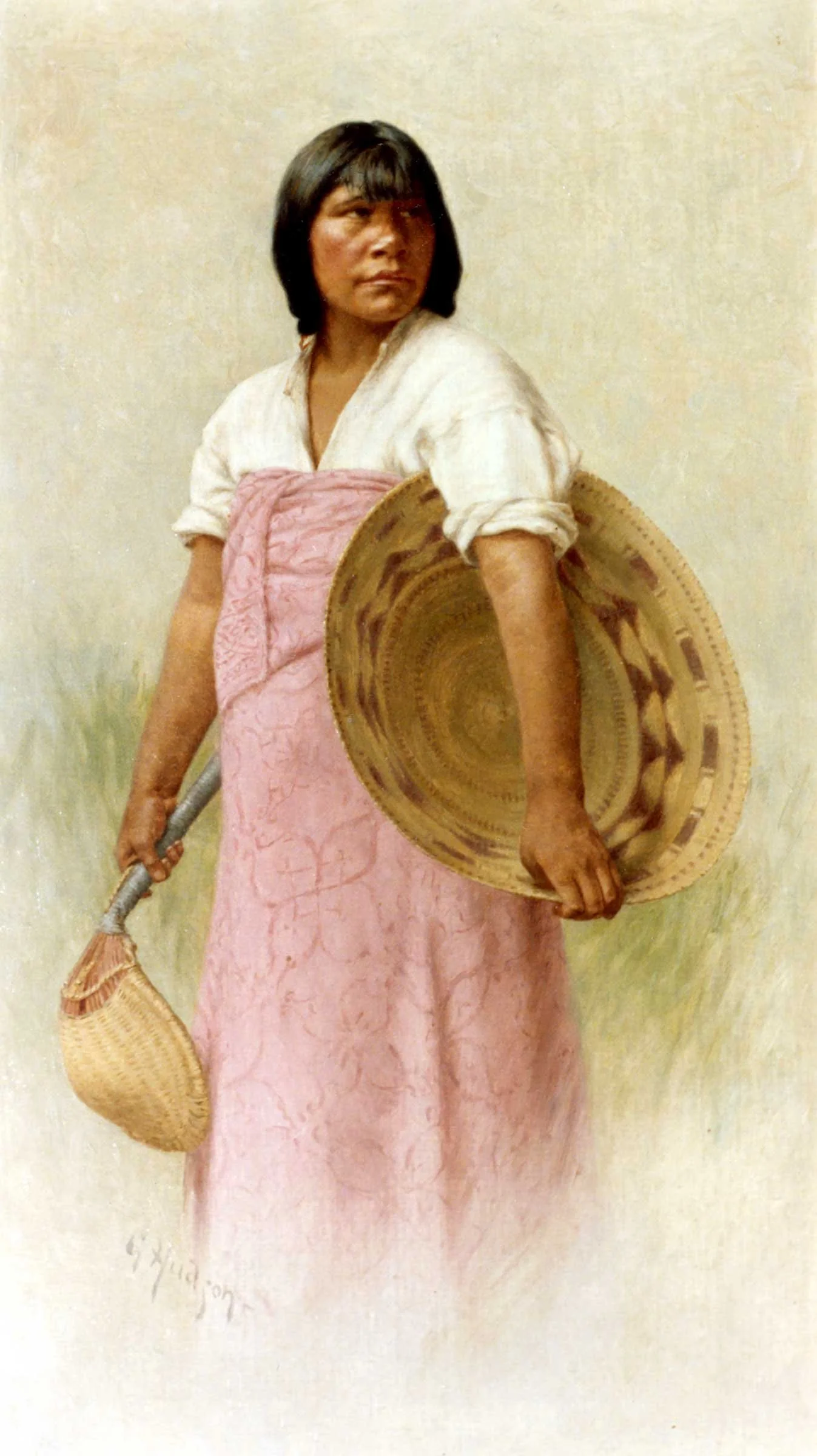
Most importantly, the Wild Gardens are home to plants and features seen in Grace Hudson’s paintings. The artist lived from 1865-1937, and her pieces largely depict Pomo peoples. Many plants in the garden are also fundamental
in creating Pomo baskets, many of which were collected by Grace’s husband John and are featured in the museum.
Pomo baskets, considered to be the best in the world, are finely made with great attention to detail and designs. Pomo peoples use an incredible variety of techniques to make baskets for everything from cradling babies to storing acorns. They can trap fish and even be used as cooking vessels. These baskets would not be possible without the plants they are made from—willow, sedge, hazel, dogwood, bulrush, and redbud, to name a few.
Smith-Ferri explains, “90% of making a basket is done before you start weaving.” The plants must be carefully cultivated before they can be used to make baskets. Sedge beds need to be tended and thinned so the roots have space to grow long and straight before the arduous harvesting process. As master weaver Silver Galleto, founder of the Pomo Weavers Society, fondly shares, “Although it is the most beautiful golden shiny material that exists in the universe, it is probably the most challenging to gather. That work and effort is evident in the baskets it creates.” Harvesting sedge requires digging for the roots, following the runners (rhizomes), clipping only the runners and not the plug (main root), and then processing the rhizomes by peeling, splitting, and cleaning each piece, bundling the roots, and storing them for many months until they are ready to use for basket weaving.
Other plants like willow must be coppiced, or cut down, so that they can grow straight branches for basketry. These processes—thinning out roots, coppicing, or cultural burns— vary based on the individual plant. They also benefit the plants, leaving them healthier.
Pomo peoples managed the varying ecosystems of what are now Mendocino, Lake, and Sonoma counties, from the wetter riparian and coast environments where sedge and willow grow, to meadows that are home to pinole plants.
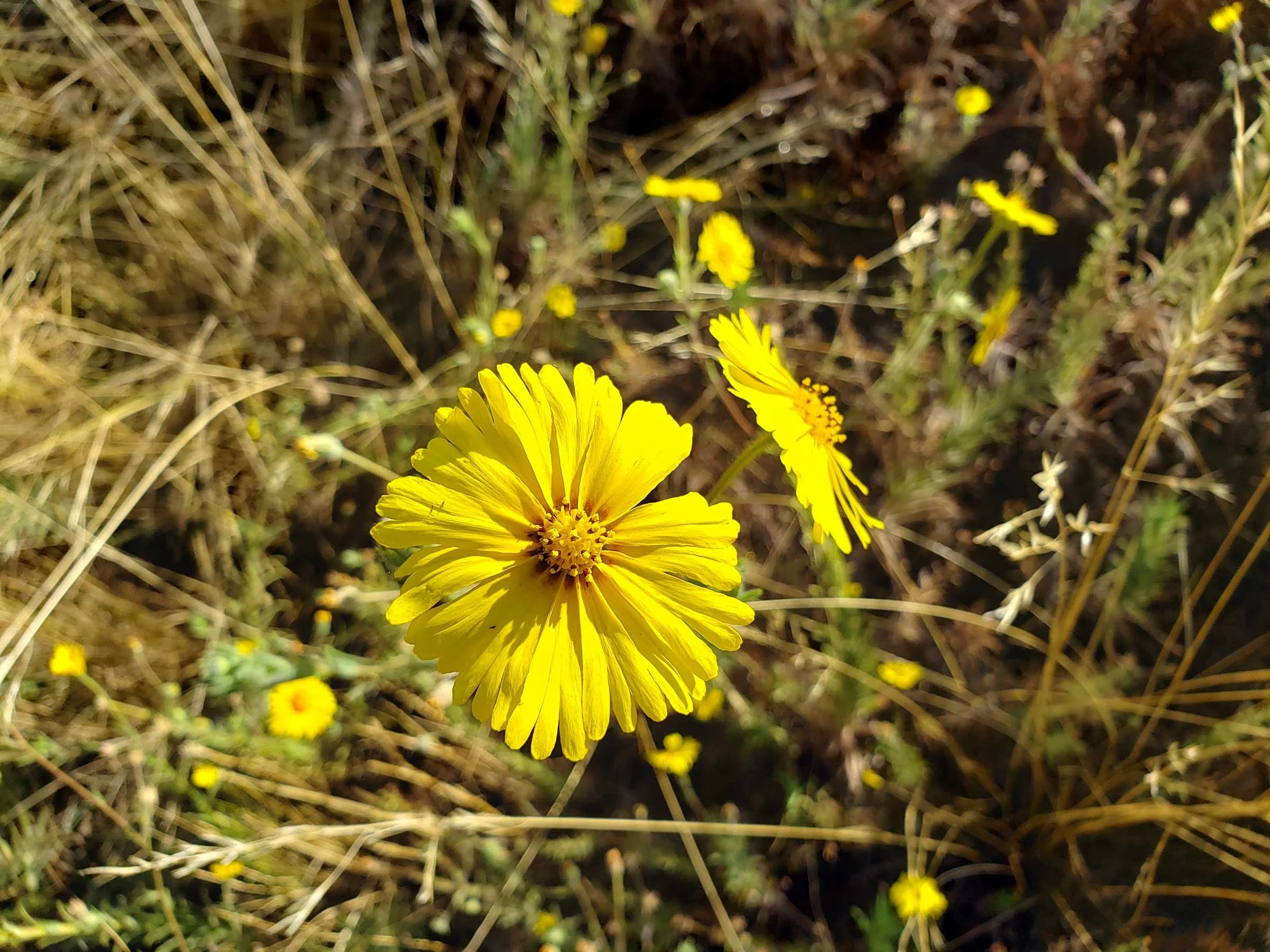
Pinole is just one of many traditional foods that is made from different parched seeds. These edible seeds come from bunch grasses like buckwheat and tarweed. Historically, Pomo peoples used a seed beater basket to whack the tops of the plants, collecting the seeds into their burden baskets, and also scattering them onto the ground. This allowed plants like tarweed (which need to be re-seeded each year), to grow in abundance the next year.
Tarweed and other pinole plants support a plethora of bugs, birds, and other pollinators, and provide cover for small creatures. Their roots, much longer than those of the invasive grasses that dominate California hills today, allow them to access water lower down and stabilize the soil. Today, many of these plants are not only unappreciated and often considered weeds, they’re at risk from invasive plants, pesticides, and private land ownership, which has prevented and continues to prevent Native peoples from managing and caring for the landscape.
Smith-Ferri is currently part of a committee that is creating an exhibit exploring the relationships of mutual care between
native plants and Pomo peoples. The exhibition will open in 2027, commemorating the Wild Garden’s 10-year anniversary. Additional committee members include Meyokeeskow Marrufo (Eastern Pomo), Corine Pearce (Little River Band of Pomo Indians), Martina Morgan (Kashaya Pomo), Andrea Davis (Wild Gardens Manager), and Alyssa Boge (Curator).
The exhibit will impress upon visitors Pomo people’s deep relationship with and knowledge about historically significant plants. It will include video, personal quotes, and historic objects from the museum’s collection, along with modern objects made from Native plants, plant samples, objects that can be touched, and other interactive elements. It will offer a little something for both kids and adults, for the plant aficionado and the plant novice.
The exhibit will focus on only a portion of the dozens of plants in the garden, including tule, soap root, dogbane, manzanita, pepperwood, and others. It is important for visitors to remember that even as the exhibit shares information about these plants, they should not try to gather on their own. Learning how to gather wild plants safely (many can be toxic if misidentified) and to take care of the plants properly can take years of learning. The exhibition is a start to understanding that just like a bunch grass has very deep roots that you cannot see, there is a lot more going below the surface.
Grace Hudson Museum
431 South Main Street, Ukiah
(707) 467-2836 | gracehudsonmuseum.org
Wed - Sat 10:00am - 4:30pm, Sun 12:00pm - 4:30pm
Alyssa Boge is the Curator of Education and Exhibits at the Grace Hudson Museum. She likes to throw and carve pottery and collects vintage egg beaters.
Photo by Caitlin Atkinson of LandCulture Studio. Other photos courtesy of Grace Hudson Museum.