‘Recession Meals’ Destigmatize Home Cooking on a Budget
Amid the affordability crisis, these social media influencers offer creative, caring ways to plan thrifty meals.
by Leticia Urieta
Originally published in Civil Eats, April 24, 2026
Food insecurity is on the rise, with new work requirements for Supplemental Nutrition Assistance Program benefits, tariff-driven inflation, and the war in Iran pushing many Americans to the financial brink, particularly people of color, children, and those with disabilities.
As more families visit food pantries in search of free ingredients and affordable meal ideas, some social media creators are developing content that helps people feed themselves in creative, accessible, and culturally relevant ways. Unlike food influencers with big-brand deals and expensive ingredients, these creators destigmatize seeking support from food pantries, clipping coupons, and cooking frugal dinners. Many use the trending term “recession meals.”
Some creators, for example, make unboxing videos with items from the food bank, a contrast to the luxury unboxing videos of expensive products. Many share meals that are made on a shoestring budget. Others dig into recipes and kitchen hacks of the past to help viewers develop cooking skills—since making it yourself will nearly always save money.
What also makes these creators so popular is that they invite viewers into their kitchens with warmth, not judgement. Along with recipes and shopping ideas, they’re sharing genuine care.
Civil Eats recently spoke with five creators about what motivates their work, their thoughts on why they’ve had an impact, and their top tips for creating affordable and nutritious meals at home.
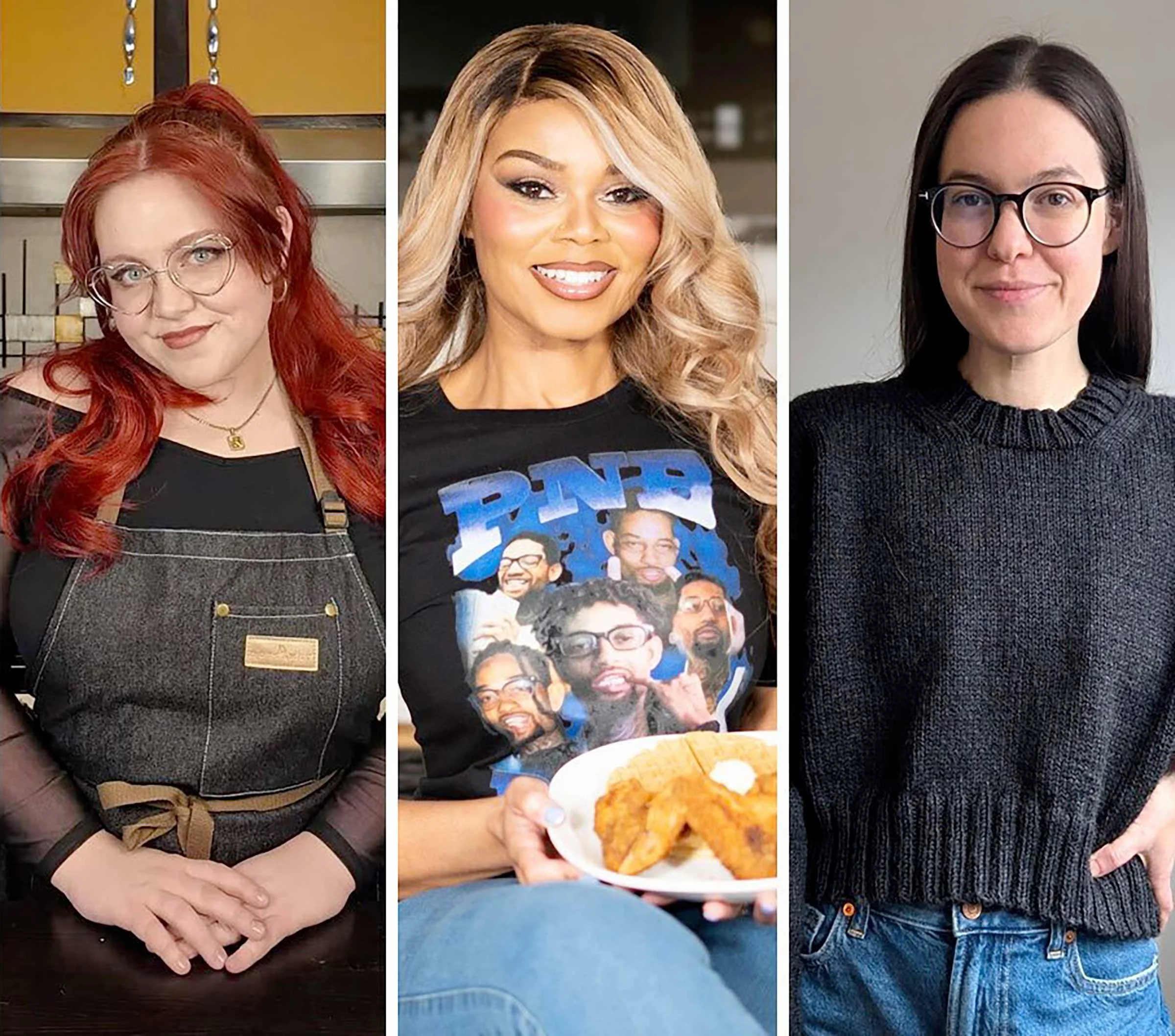
Kiki Rough (left), Carolyn (middle), and Kate Vee (right).
Kate Vee (@itsme.katevee)
Vee is an epidemiology Ph.D. student and vegan on a budget in North Carolina. Her “day in a life” videos show her trying new recipe ideas, knitting her own clothes, reading at mealtime with her adorable cat, Kali, and cooking for friends. She debunks nutrition misinformation with bone-dry humor, and her “too much food Tuesday” potluck videos with friends are inspiring.
What motivates you to make your content?
I started making content about cooking and eating on a budget after the Trump administration
started cutting research funding. Several of the projects I was working on were threatened or delayed, and I had to change jobs several times due to unstable funding environments.
Since I was cutting my budget anyway, I thought people might like to see my strategies for saving money and what kinds of foods I could cook with really cheap ingredients. It really took off in a way that I didn’t expect, and now I just love showing up every day and talking to all these people who chat in my comments.
What impact has your work had? How has it made a difference for members of your audience?
I hear from people about how seeing me make low-cost recipes, talk about realistic affordable nutrition, and use what I have in creative ways has saved them money and improved their diet quality. A few people have told me that they are eating a lot less meat too, which I love for the animals and the environment.
Also, I hear from people that my content is helpful in their recovery from restrictive or disordered eating because I focus on including all the things you need for good health like vegetables and fiber, without restricting myself from eating anything else I want, like dessert every day.
What’s a practical tip you can share with readers?
I recently published a “4 Weeks to Pantry” list that shows how to build a pantry from nothing, after hearing from many people that the $50 per week budget wasn’t feasible because not everybody has pantry staples to rely on.
Every week, set aside a portion of your budget to adding or replenishing long-lasting pantry staples like beans or grains, textured vegetable protein, etc. Stock up on canned goods you use regularly when there’s a sale, and slowly build up
the basics, so that each week you can devote most of your budget to fresh fruits and vegetables, tofu and tempeh, yogurt, and other fresh ingredients.
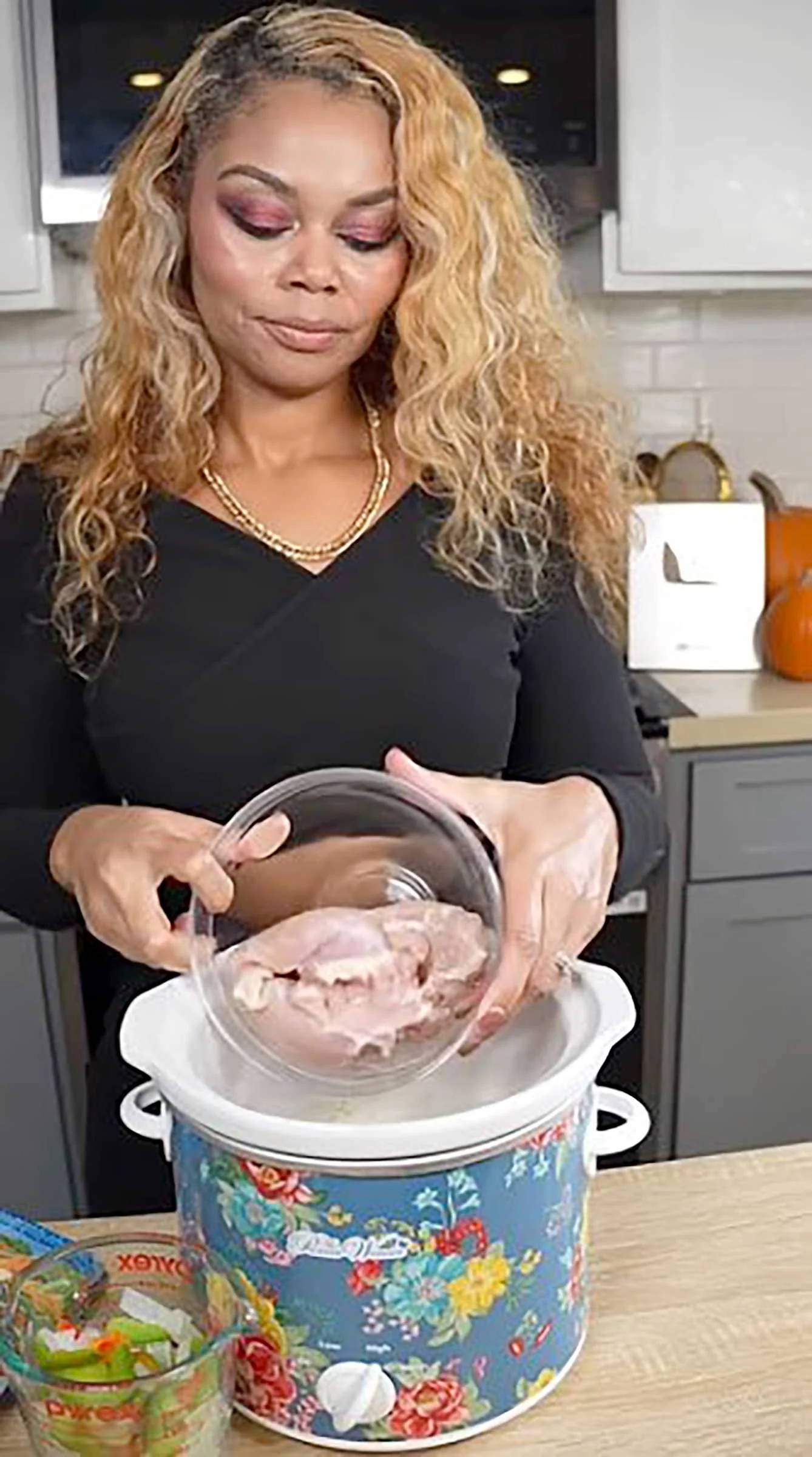
Carolyn demonstrates disability-friendly green Thai curry.
Carolyn (@epicuriousexpeditions)
Carolyn, who only uses her first name publicly, creates accessible recipes and meal ideas for people with disabil- ities and other needs. Her warm and welcoming personality and vibrant, easy recipes add to the pleasure of cooking a meal.
What motivates you to make your content?
My mom had lupus, so I started cooking at a young age to help her when she was unable to cook. Also, my son is autistic and needs help with certain activities. I also tore my meniscus and couldn’t cook in my normal way [for a while]. I started using a
stool in the kitchen to sit down and finish my meal prep.
I have traveled extensively, grew up in a multicultural area, and am familiar with a lot of different cuisines, so I can pull from different types of food to make something fresh and new. I also have videos that feature accessible soul food recipes so that folks don’t feel like they have to cook the same things all the time.
What impact has your work had? How has it made a difference for members of your audience?
I get a lot of feedback from people with different disabil- ities. Many tell me, “Before I became disabled, I used to be a chef,” and they say how helpful these videos are. Other folks tell me they are cooking with their children with autism or Down syndrome, or a parent with dementia, and they can make simple meals together using my videos.
I grew up really poor, and it took years for my mom to be approved for disability assistance. So, I think a lot [about] accessibility in terms of cost as well as shelf-stability. Many times, you buy groceries and that’s all the energy you have. My videos show how you can use certain ingredients like potatoes, carrots, or canned chickpeas that last weeks. People can hold onto these ingredients for longer, reducing food waste and cost.
What’s a practical tip you can share with readers?
Don’t feel like you have to stand up. All my recipes are designed so that you can sit down as you cook. All my slow-cooker meals allow you to take your time if you have fatigue. If you have the energy to open a few bags and then take a break and come back, you don’t have to rush.
Kiki Rough (@kikirough)
Also known as the Recession Recipe Lady, Kiki Rough is a home cook with a big personality that leaves no room for shame. She loves to use basic kitchen skills and recipes from previous generations to help people adapt their cooking to create accessible, affordable, and allergy-friendly meals.
What motivates you to make your content?
When I dropped out of college, I was working multiple jobs and couldn’t afford to feed myself. People would tell me, “Wow, Kiki, this is the best you’ve ever looked in your life,” when really it was famine.
When I started seeing people struggling around me, I thought, “Well, I’ve learned a lot of useful things and I am always enthralled by looking back in history and finding solutions to the problems of the past.” I specifically started looking at Great Depression and World War II [cookbooks] because I knew that between victory gardens and limited access, they’d already figured it out.
I have a background in adapting recipes for my family [members] who have gluten allergies, dairy allergies, egg allergies, and a vegan. I figured why don’t I adapt these historic recipes to modern food access?
What impact has your work had? How has it made a difference for members of your audience?
I have a gorgeous little community. Something I’ve seen is not only people coming to me and saying, “Thank you, Kiki. This worked for me,” but whenever there are comments that I don’t know the answer to, people will pop in with their own life experiences and teach people what’s worked for them. People from so many walks of life are coming together to support one another. I have over a million followers across platforms, which speaks to the need right now.
What’s a practical tip you can share with readers?
One of the biggest pieces of advice is to look back at historical knowledge, even from the ‘90s, because the biggest expense for people is the cost of convenience. You can bake a loaf of bread for cheaper than at the store, but not everyone has the time and skills to do that. We are paying people to bake and slice that bread, so leaning into baking knowledge is helpful.
There are so many possibilities for basic ingredients. You can cook chickpeas to taste like chicken! You have to learn to adapt what you have access to. Some folks feel demoralized when they go to the food bank and get a loaf of bread, a half-gallon of milk, and some beans, but there’s so much you can do with that. It’s a matter of using the tools and knowledge to turn that into something with dignity.
Read about two more influencers in the full article: Brenda Sanders (@AfroVeganSociety)
Vieney Causor (@vieneyskitchen)
Find the original and complete article on Civil Eats at civileats.com/2026/04/24/recession- meals-destigmatize-home-cooking-on-a-budget/.
Leticia Urieta (she/her/hers) is a Tejana writer from Austin, Texas. She works as a teaching artist and freelance writer and editor.