Mulligan Gardens
The Ever-Evolving Work of Farming
by Holly Madrigal
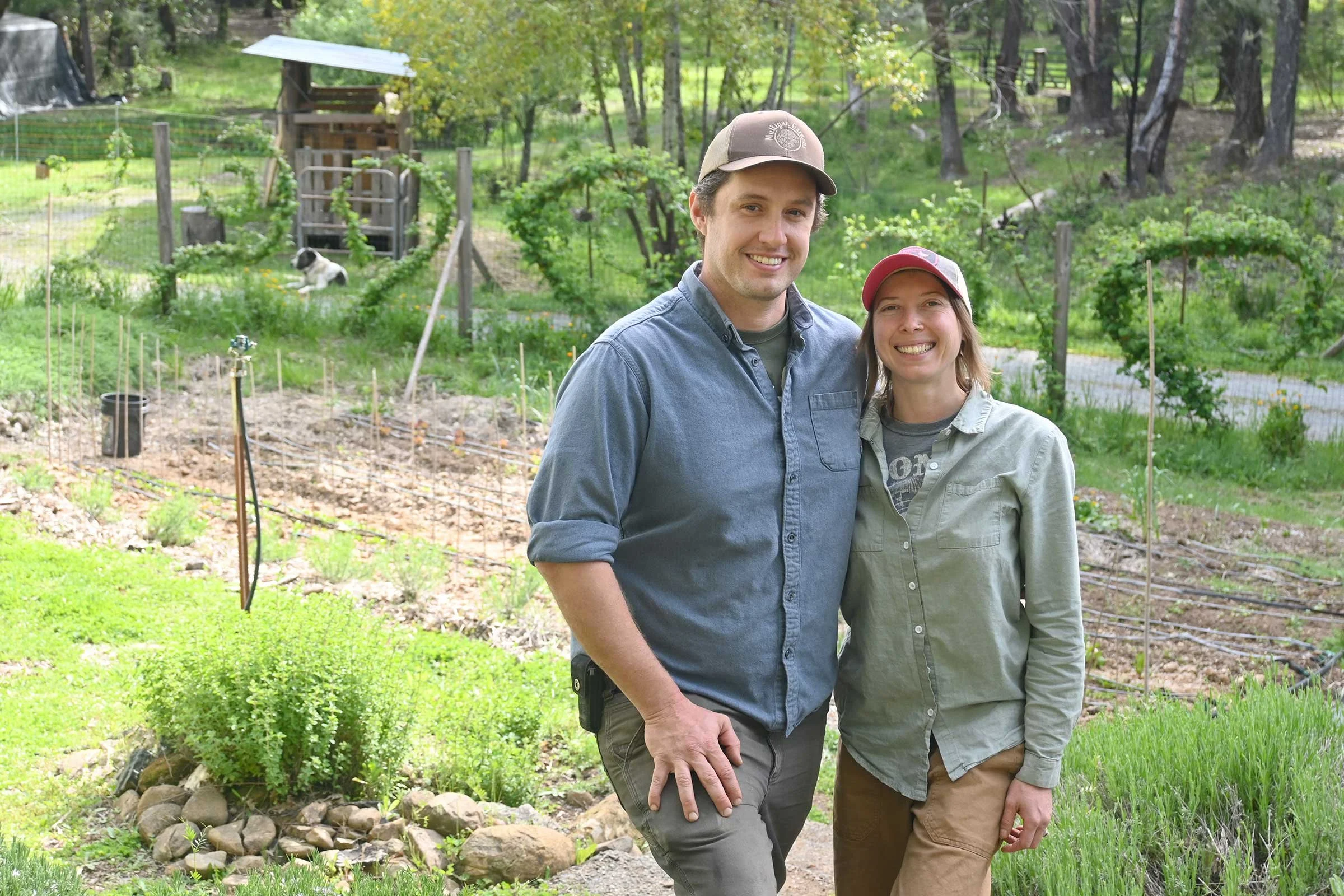
Mic Rueb and Thea Foley
Those of us who follow the farming and ranching communities in Mendocino County think of the folks at Mulligan Gardens as local champions. We’ve watched many small farms close when the realities of small-scale farming hit home. An unexpected crisis—with animals, water systems, or weather events—can sidetrack your current project or pull you out of bed at any hour of the day or night. Farmers must be creative, industrious, and strategic to keep the business afloat without burning out.
The folks at Mulligan Gardens have managed their diverse farm operation on 20 acres outside of Laytonville since 2018. It was started by brothers Michiel (Mic) and Ben Rueb. They both immigrated from the Netherlands to Riverside County near Los Angeles in 2005. Mic moved to Mendocino County in 2012 for an internship at the Solar Living Institute, then Ben followed a few years later.
Mic met Thea Foley when they were both vending at the Bell Springs Farmers Market in 2018. She joined the brothers at Mulligan Gardens, bringing her own ag expertise with her. In the early years, Mic grew most of the produce and Ben managed the cultivation of culinary mushrooms. Prior to the move north, Mic had completed an internship at Claudia’s Organic Herbs in Orleans, CA, where he learned about growing and drying culinary herbs and using them in herb blends. Once Thea joined them, she began a chicken operation while also raising pigs, goats, ducks, and cows.
During those first years together, the brothers and Thea worked tirelessly to establish a farm that could sustain them. They grew market crops, poultry and livestock, and cultivated mushrooms. They sold value-added products like mushroom jerky and herb blends. They applied lessons learned as they went, expanding and contracting where needed.
Initially, cannabis provided an opportunity to homestead, though it was never the main crop. Both brothers were more interested in growing food (or playing piano) than growing weed. “We felt very lucky that we had been heavily diversifying for years before the crash of the industry,” Thea shared. “Staying in cannabis was never our plan.” Ben became a self-taught culinary mushroom farmer, which turned out to be a wise move.
“I remember Ben used to chop hay bales for the mushroom medium with scissors!” Mic remembers, “then a weed whacker, even a mower,” he laughs. “But eventually we got a bale chopper with help from a Good Farm Fund grant, and that was a huge help.” This piece of equipment was a game changer. Where before it took thirty minutes to chop one bale, the bale chopper could chop five to six bales in the same amount of time.
The trio is always looking to improve and streamline things.“We decided to go all the way with the oyster mushrooms. We have a good setup for those, and they are less finicky,” says Thea. “That is what the restaurants and other accounts want.” Mic has been reviewing all the processes to make them more streamlined. He set up a machine that uses an auger to pack pasteurized straw into the bags where they grow the oyster mushrooms. In fact, a lot of their mushroom growing tools were designed and built right there on the farm.
In 2025, the team juggled up to six farmers’ markets a week. “I love being at the markets,” says Mic. “It is so great to see our customers and to connect with our fellow farmers. We made great networks doing all this, but it was a ton of driving and then even more work when you get home to stay on top of everything on the farm.”
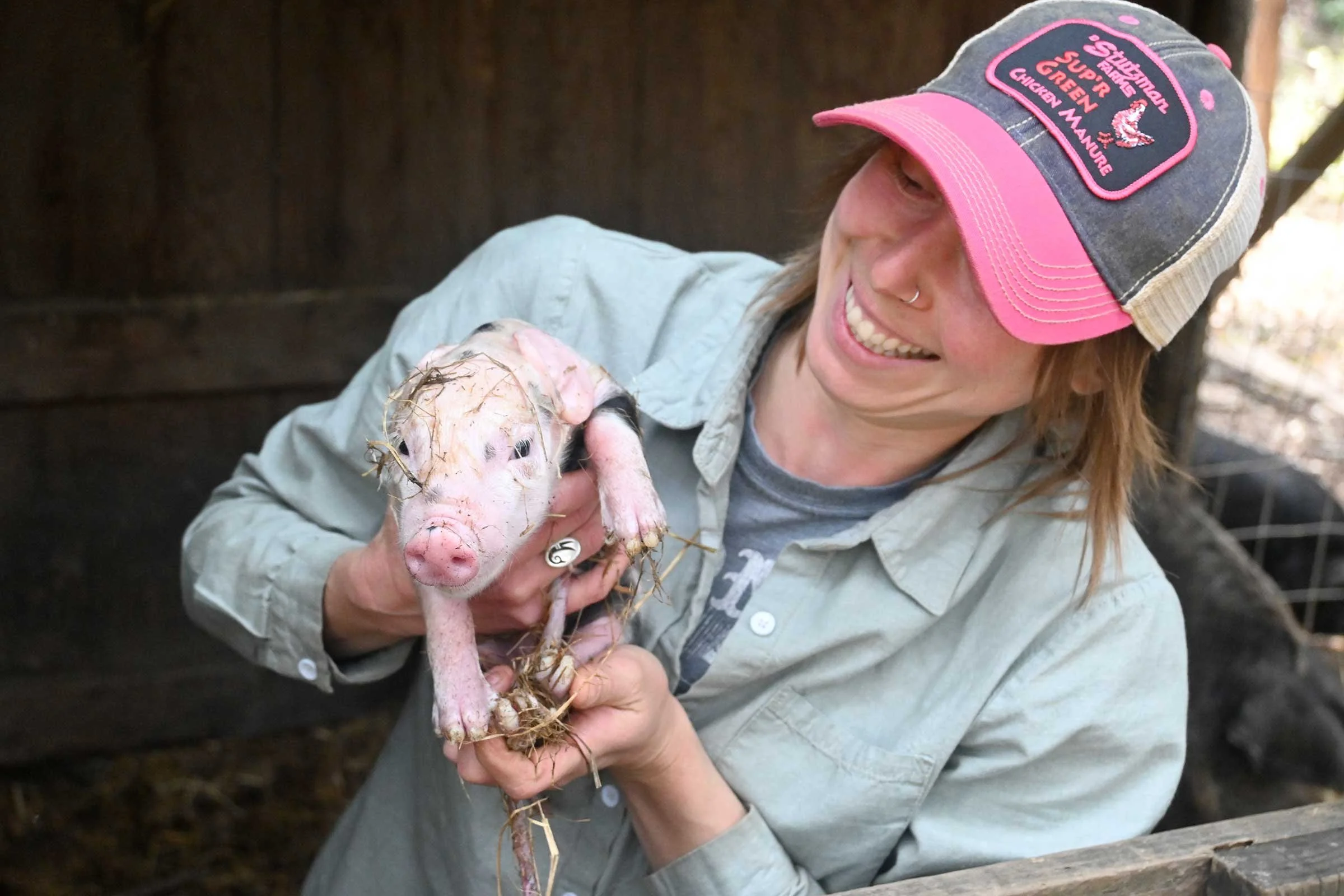
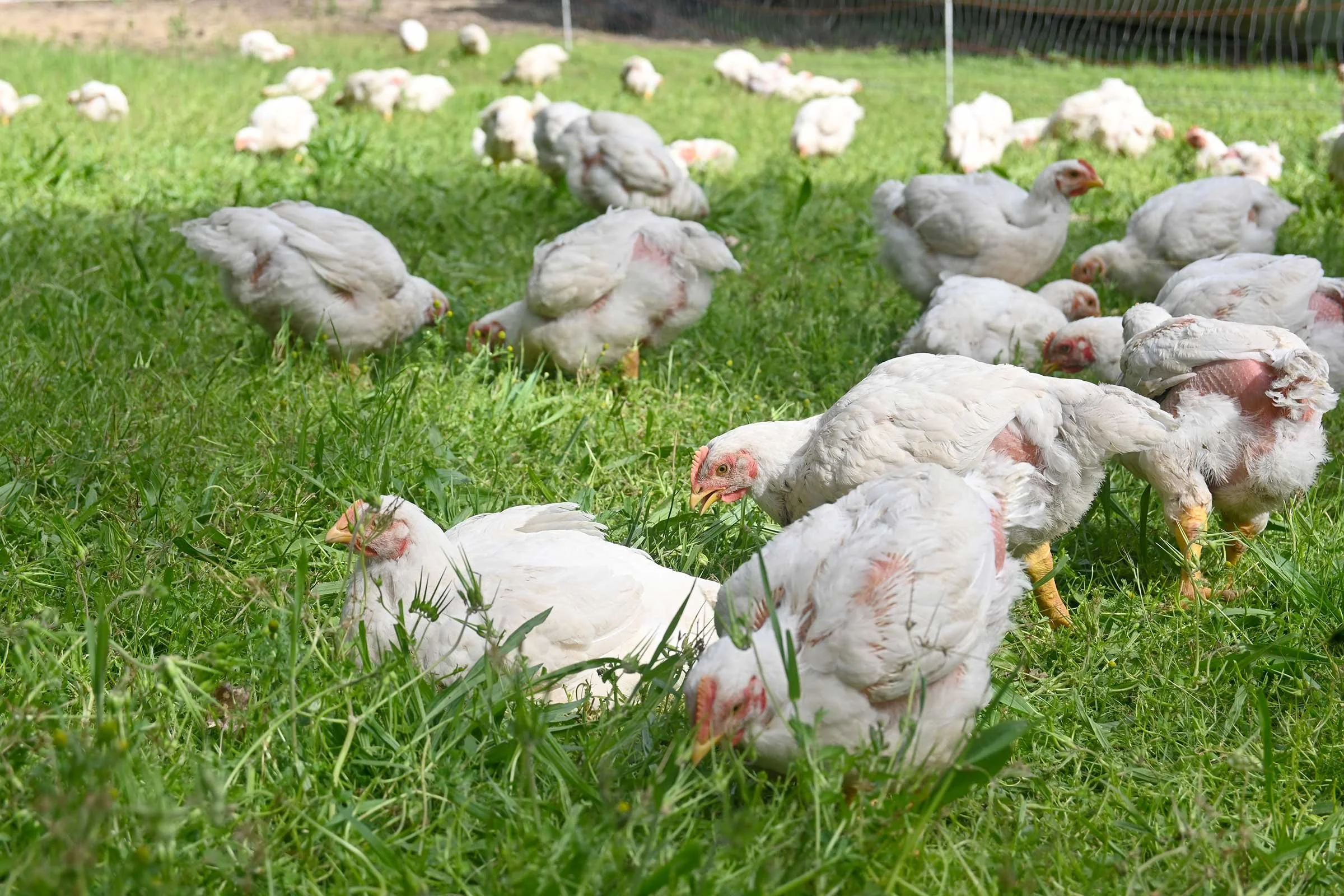
Thea handles the livestock portion of the business. Over the years, she has streamlined her chicken operation, raising more birds in fewer batches. She is prepared to raise 1,000 chickens this season and sell them at area farmers markets. She is always thinking about diversification, adding, ”I really want to try Thanksgiving turkeys this year.”To add to an already busy year, Mic and Thea also planned and hosted their own wedding in 2025, welcoming friends and family to celebrate their love amongst the flowers and towering oak trees on the farm. That was not the only change, however. Ben, a classical pianist, accepted the director position at the Ukiah School of Music and moved to town with his new wife, Kristina.
“Last year was chaos,” remarks Thea. “We nearly burned ourselves out.” The couple took the quieter season to re-evaluate the farm and consider their options. “We are definitely in a transition stage,” says Mic. “It’s not rolling super smoothly just yet. We’re hoping this season is where we find our capacity—to be able to pay our bills with growing more of less, but also still have a life.“
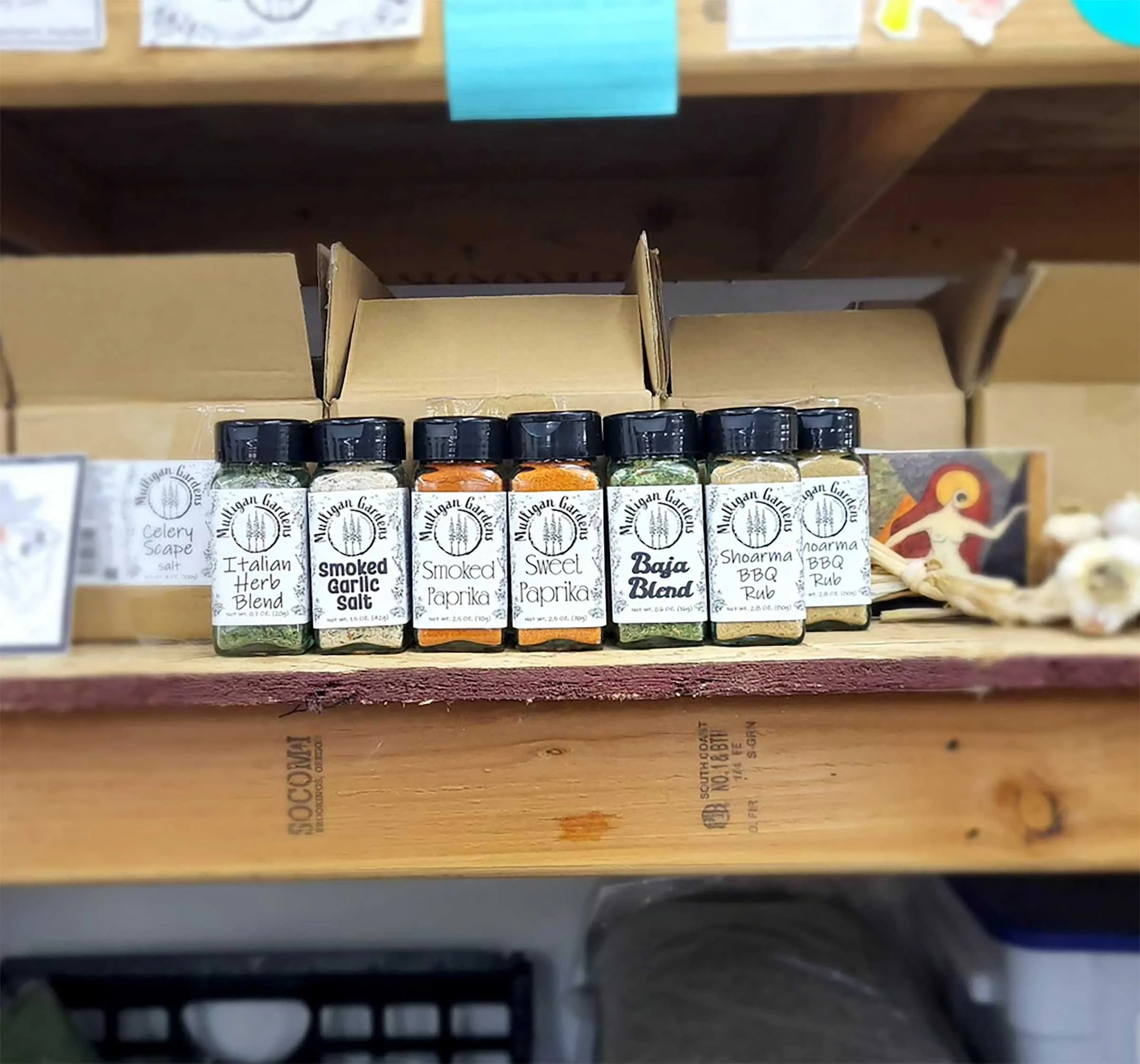
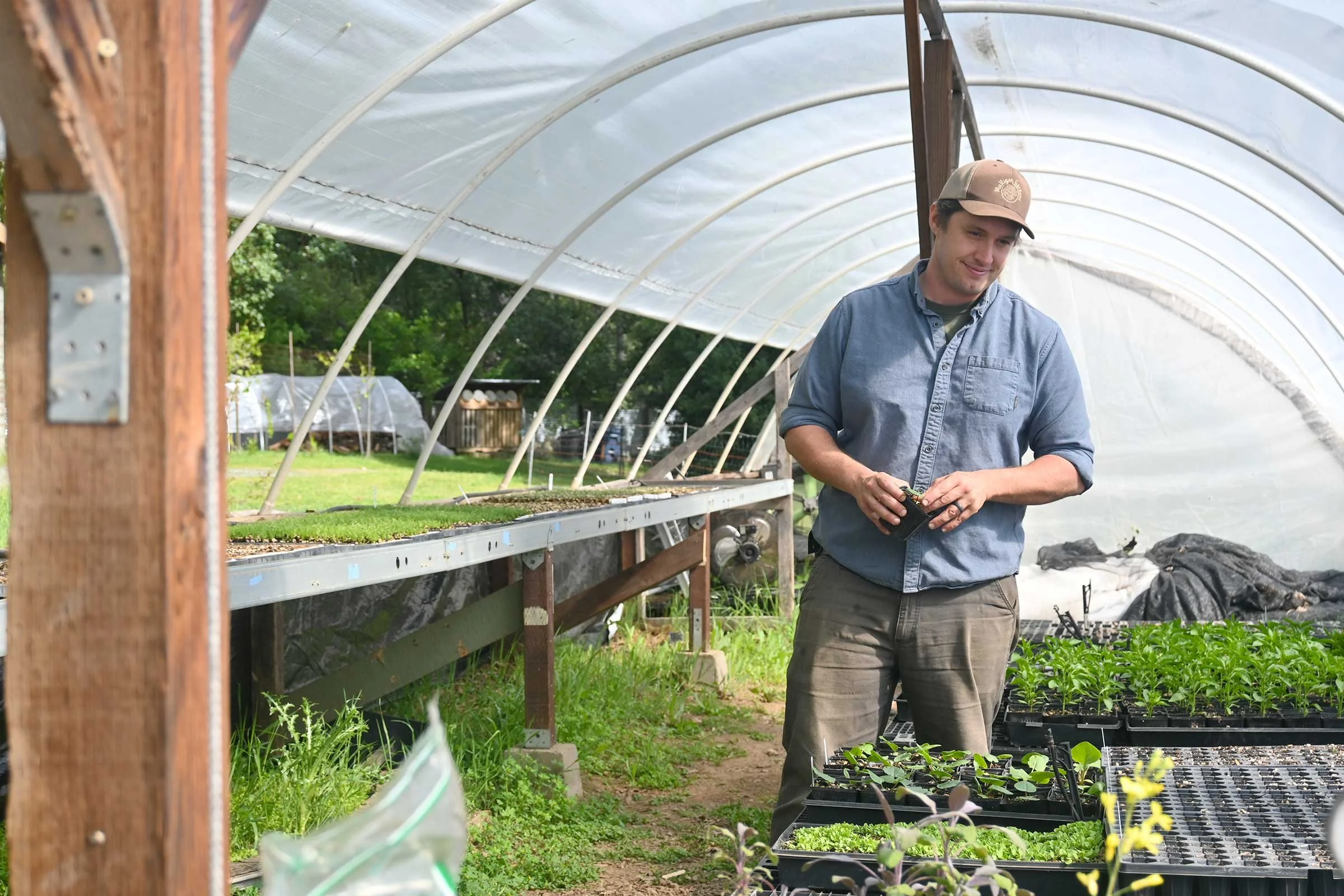
After carefully analyzing the sales data, Mic realized that whatever the farm grows needs to be sold, either fresh or dried. If it doesn’t sell fresh, he explains, “We have a plan for it right away.” Mic has reduced the produce so that he can focus his attention. All the herbs are harvested and bunched the same way, which is more efficient. “And we can dry them and make them shelf stable,” says Mic. The focus on mushrooms has narrowed, as well. “We used to grow five to six varieties, and now we have narrowed that down to the oysters.
”Mulligan’s is preparing to sell its mushroom jerky more broadly. The Seasoning Salts, made of a mixture of sea salt and mushroom powder, have gained a following. “One day we had a bunch of leftover Matsutakis and there was this dried powder at the bottom of the bag. We added that to salt, and it was knock-your-socks-off good,” Mic says. He adds with a smile, “I love the herb blends, but you can only make pasta sauce so many times a week. We realized that you can add the mushroom salt to almost every dish, and it enhances the flavors.
”Thea adds, “We can make it at scale. San Francisco is only three hours south, and there are so many markets and cool shops that might be interested in the mushroom salts.” Mic jumps back in, saying, “Last year we made around 2,000 jars of the mushroom salt, and if we could double that amount this year, it would be great. We can sell more online and get this product in front of more people.
”Over the next five years, they would like to set up a packaging line and become a co-packer. Irene, of Irene’s Garden, has been producing her own garlic powder. Mic and Thea would love to collaborate on some herb blends that support neighboring farms like hers. “Boonville Barn Collective grows incredible paprikas,” says Mic. “And Caymen (of Big Mesa Farm in Comptche) and other farmers grow a ton of herbs. There is a lot of potential out there. We have found this great farm network of other amazing producers.”
There is so much to learn from this small farm that is diligently working to find out what suits them. If you want to support Mulligan Gardens, stop by their booth at one of the farmers markets where they sell. In an age where too many folks are leaving farming altogether for jobs with more reasonable hours or retirement benefits, people like Mic and Thea are figuring it out. It is up to eaters like us to support work like theirs.
Mulligan Gardens
Laytonville
mulligangardens.com
Check website for farmers markets and to purchase herb blends online.
photos by Miles Mueller
Holly Madrigal delights in sharing what’s great about Mendocino County. She enjoys meaningful work with the Mendocino Land Trust and publishing this magazine.
