A Decade of Change
Booms & Busts of the Last 10 Years
by Gowan Batist
So many of our farms have grown up alongside this magazine. The cohort of young farmers of my generation have followed the arc that agriculture has been taking across the country in the last ten years. As we left our twenties, a lot of us have left agriculture or moved on to more affordable land in other states. A smaller percentage of us have chosen to keep doing this wild, impractically practical thing that is making a living on a landscape, even as we enter our 30s and 40s and have families of our own. Some of us have accomplished that transition by scaling up, by integrating with other business entities, and some by scaling down. All of us are bringing more experience, literally, to the table, and helping to shape the next generations to come.
For us on the farm, the last ten years have included booms and busts—the excitement of helping to launch MendoLake Food Hub and building a distribution node on our land, the economic upswing of being allowed new agri-tourism opportunities by the county and a robust wedding flowers business. Then the pandemic when our wedding flowers bloomed in the field with nobody to see them. At the same time, the community rallied around food needs and FEMA became a major purchaser of produce for CSA boxes via the hub.
On our farm, after my dad’s death during the pandemic and my mother’s (thankfully temporary) need for full-time nursing care, we pivoted away from growing produce and flowers. We leased the main field to two non-profits, and have focused on our fiber sheep flock, which grazes the majority of land on Fortunate Farm. Our neighbors, Rhizing Ground Farm and Elderflower Farm, were both started by former Fortunate Farm employees. They bought adjacent land and have started a farm stand, along with Wavelength Farm, hosted at the Caspar Hub (the old Caspar Inn). The hub is experiencing a revival under the care of friends of ours who used to camp at Fortunate Farm while they toured properties for sale. They are all doing a fabulous job keeping the coast fed.
For the first time in my adult life, these days I haven’t been making my living as a farmer, but as a shepherd and writer. I haven’t quite been able to quit the dirt, though. Last fall we grew 1500 pounds of winter squash for the Fort Bragg FoodBank alone, and untold quantities of heavy storage crops, including potatoes, onions, corn, and pumpkins for our family and for distribution through support networks.
The majority of the seed we planted last year came from Going to Seed, a project also happening in Caspar that focuses on locally adapted, landrace seed breeding. Tall, strong, sweet corn within sight of the ocean, luminous pumpkins, and a gorgeous array of beans are being produced for home gardeners. The project’s goal is wild adaptation for true, long-term sustainability. It was a joy to grow them out— even if deer DID get in and eat all the purple fava beans we planted. There are gallons of the most beautiful striped and multi-colored corn kernels in our pantry. They make great tortillas, but we mostly make them into soft corn dumplings that float in our winter soups. It’s a novelty and an honor to grow coastal corn that can provide serious calories, as well as red and pink pumpkins, which we piled on our stairs. The collection slowly dwindled over the winter and spring into curries, fries, chili, and pie.
This summer, we are taking it easier on the vegetable front than ever before. The sheep are grazing on lush pasture converted from vegetable-growing fields, and we are grazing on our own home garden of vegetables, berries, and fruits. Our front yard orchard and backyard vegetables are apostage stamp compared to the hundreds of acres I worked as a college student in Portland, Oregon, and the big-for-Mendo market scale we have grown on Fortunate Farm in the past. I am relying on our neighbors to plant the heavy fall harvests, because if all goes well, we will be welcoming a baby this July. We have learned not to plan on harvesting thousands of pounds of potatoes and pumpkins immediately after the birth of a child.
Thankfully, our neighbors are reliable. Even as we plant our own patches of celery, onions, carrots, squash, and beans, I know we will be buying crates from our immediate neighbors and from the MendoLake Food Hub to get us through this winter.
These days, when I see farm friends out and about, we’re toting our toddlers, not dancing in someone’s barn until morning chores. When I recently attended a felting workshop at Ridgewood Ranch—a place that has hosted some of the best memories of my early farming life in Mendocino—some fresh-faced new hires drove by on an ATV, and they looked like kids to me. Bright, capable, committed kids with so much ahead of them.
I’m grateful for them. I like the look of the next generation. Most of the young people who move through our educational programs and seasonal work positions will not become lifelong farmers—and that is okay. They will all become people who understand in their body what the work of sustenance actually means, and we need people who understand that in all roles in life. Spending a few seasons farming before moving on to another career is not becoming a failed professional farmer. It’s becoming an ally, an educated consumer, an aware participant in networks of survival that scale, distance, and corporate opacity have largely concealed from people in our country. I’ve taught almost 100 interns over more than a decade, between managing the farm at Noyo Food Forest and guest teaching at the School of Adaptive Agriculture. Only a few of those students are now full-time farmers, but they are all success stories.
In addition to the generations of young workers and students that come across the fields, we are now raising a brood of local kids on our farms. My friend Ruthie of Headwaters Grazing, whose first two sheep came from my flock more than ten years ago, showed both our curious toddlers the newborn lambs in their pasture this spring. She pointed out and explained the parts of a placenta left on the ground, which utterly fascinated them. Later, the two kiddos teamed up to push a wine barrel around and around a barnyard in determined concentric circles.
These ranch kids have been in the dirt from right out of the womb. They are learning to tend to plants and animals and feed themselves and move safely around machinery, the way I did as a kid. Our toddler has already clipped fleece off of the flank of a patient ewe, my hand over their tiny one, guiding the blades. While the learning curve is always going to be steep in a complex and changing world, the hope is that we do all of this a little better each time, that we buffer the hard lessons with resilience built from careful tending. Rain runs off hard ground, but is held by a well-nourished field. We are all, in one way or another, doing the work of that nourishment for our collective benefit. One of the beautiful things about this magazine has been the opportunity to gather up those stories in all their diversity and get insights into the far corners of this county, the trials and successes of so many farms, ranches, food and wine businesses that we otherwise might not get a chance to know.
It’s been ten years of Word of Mouth. What a decade it’s been, both locally and in the wider world—but I think we’ve got a few more in us. The future is looking fruitful.
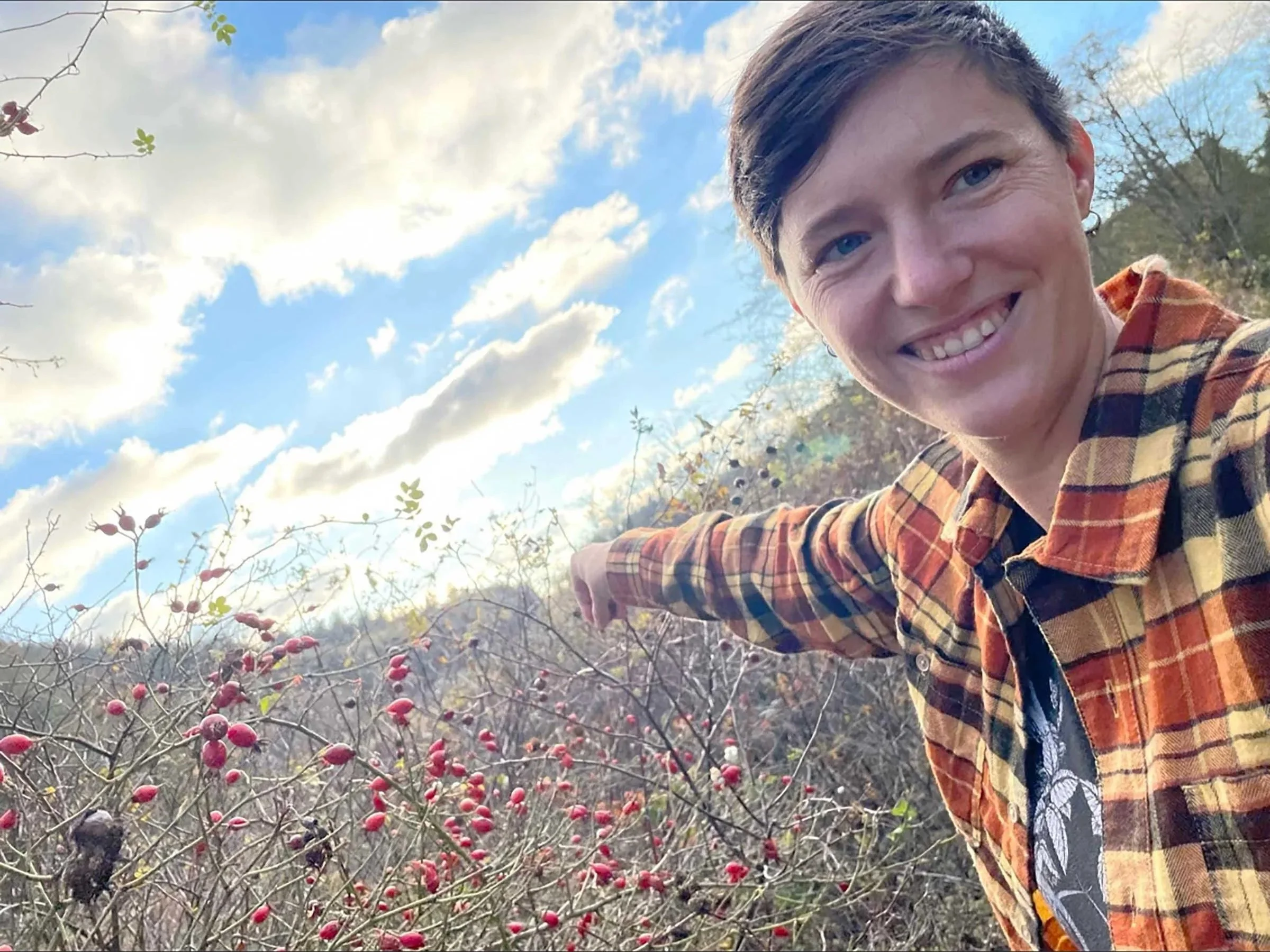
Gowan Batist of Fortunate Farm is a Post-Industrial Pastoralist following sheep around the skeleton of a boom town. She is seldom seen, but sometimes glimpsed with a baby on her back, propagating native plants, spinning wool, hand shearing sheep, or meal prepping baby food with local bulk food via the MendoLake Food Hub.
