Full of Beans
Luscious Legumes from the Boonville Barn Collective
by Gideon Burdick
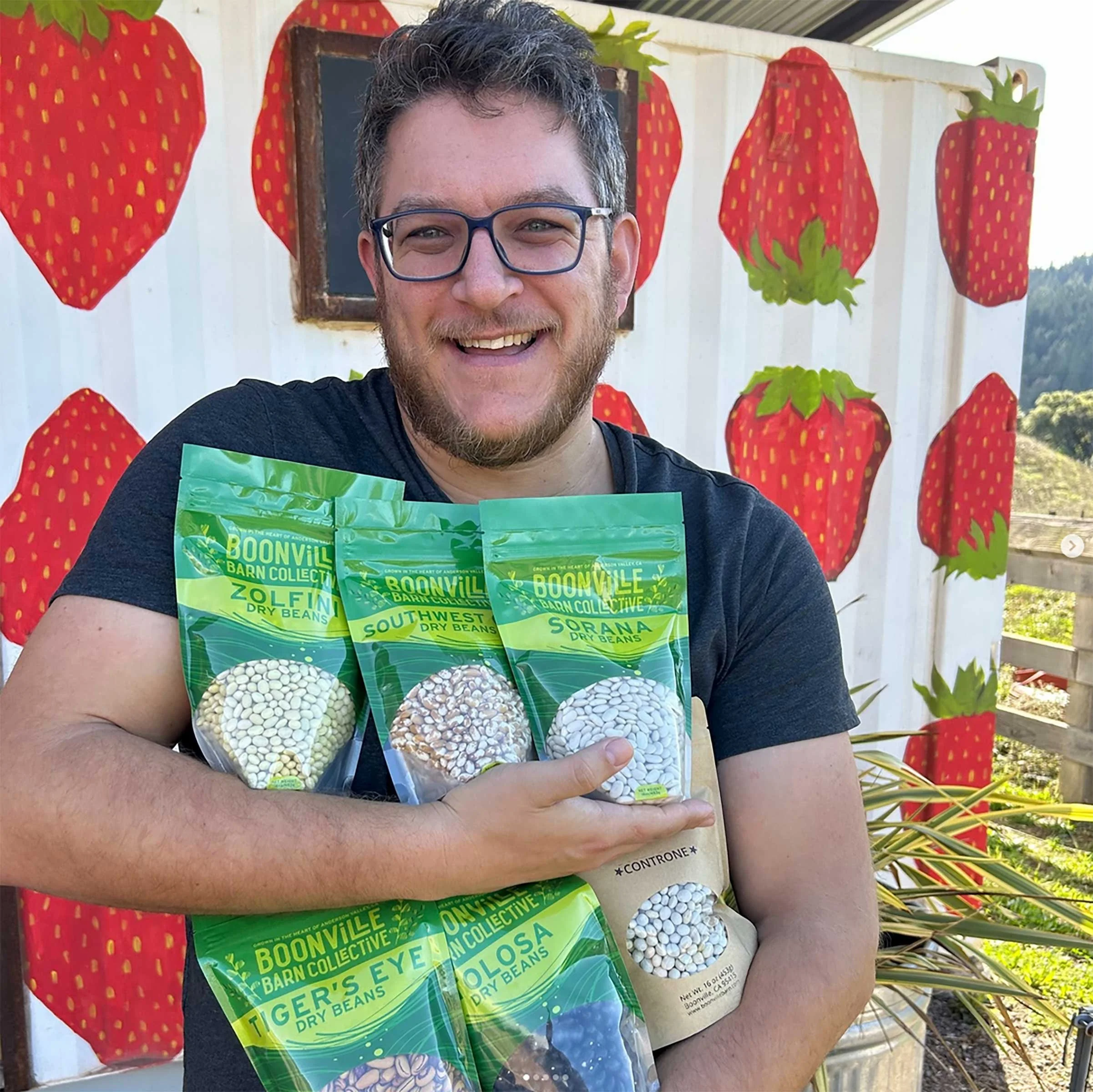
Gideon and his beans
In the winter of 2020, as the pandemic began to tighten its grip, we were wrestling with how to sustain our farm and also how to feed our local community. Our farm predominantly grows chiles and turns them into dried chile products like powders and flakes. As orders from our food service distributor were placed on hold, we knew that diversifying would help us bridge part of the expanding gap.
So even though our chile powders grace the shelves of many stores around Mendocino County, we needed to think in a different direction. We’d previously grown a small production of Italian dry beans, so we decided to expand that bean crop and possibly plant others. We started exploring different varieties that might grow well in our climate and we haven’t looked back.
We were incredibly lucky to get connected to Mike Reeske, a farmer in San Diego County who, after retiring as a high school science teacher, dove into the world of heirloom bean varieties. Mike has become a mentor to many farmers in California, including us, introducing us to new varieties, creating new types of beans on his farm, collaborating with UC Davis, and helping keep many of these hard-to-find beans in production. Without Mike’s guidance we wouldn’t have been able to diversify our bean varieties and yields so easily.
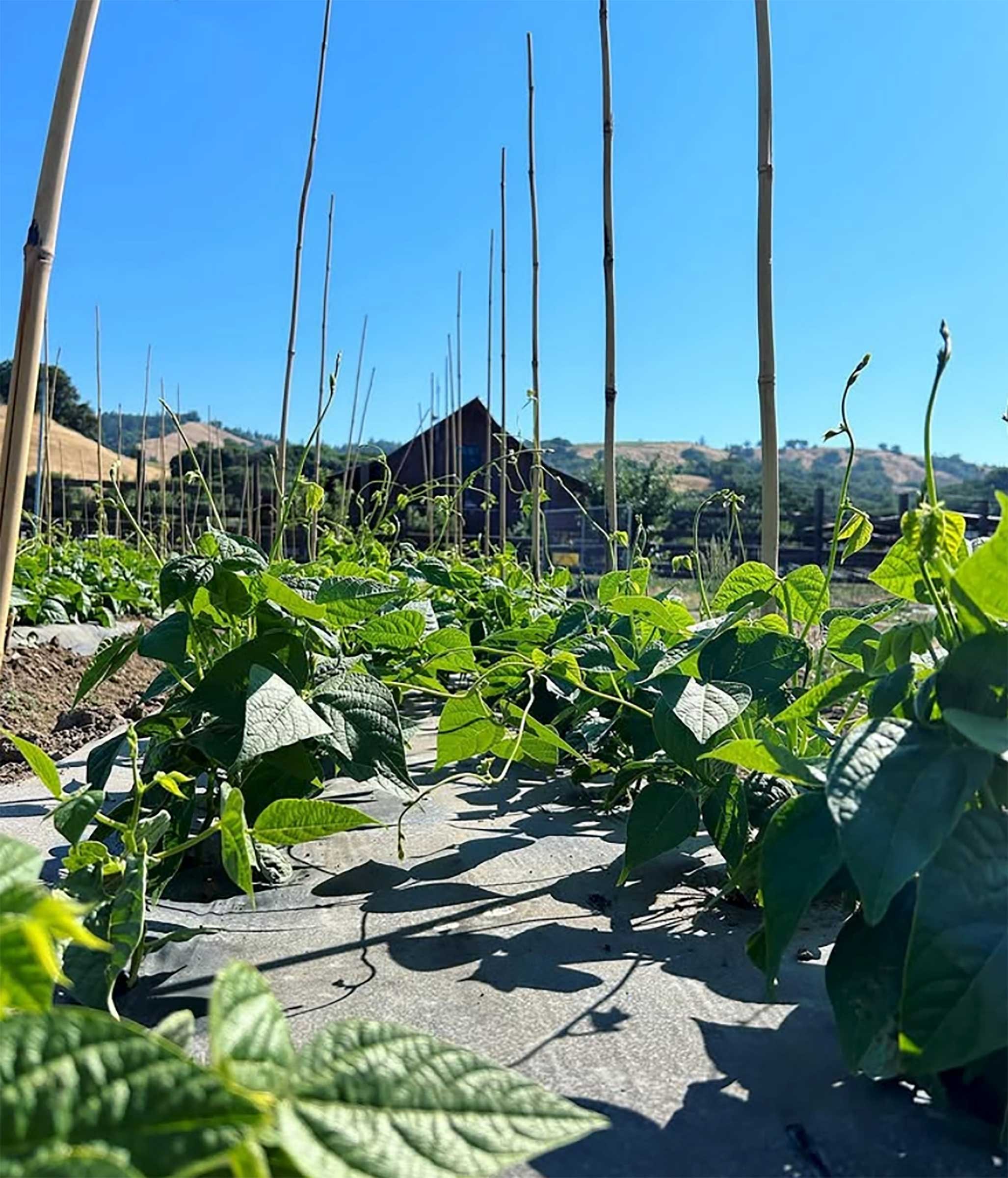
The beans aren’t just exceptionally nutritious with excellent flavor. They also help fix nitrogen in the soil, giving our fields a break as we rotate between chiles, cover crop, and beans. We’ve expanded to three acres of beans, growing nine different varieties. It’s great to have a crop that is not only a boon to soil health, but tastes great, too!
Similar to our dedication when it comes to chiles, we focus on growing heirloom and hard-to-find beans. We’ve been experimenting with tepary beans, an extremely drought tolerant variety native to the American Southwest, as well as some Italian varieties. We also grow UC Tigers Eye and UC Southwest Gold, both of which are organic, hybrid products bred at UC Davis for higher yield and increased resistance to various bean diseases.
As the 2024 season closed, we were faced with another challenge. We were out of space on our own farm, but had a lot of interest from home cooks who wanted to try our beans. With a focus on building and feeding community, we decided to work with three other farms for the 2025 growing season. While one of our partners in Lake County suffered a complete crop loss this year, Sophia Bates at Pennyroyal Farm and Sammy Tookey of Tookey Farms in Healdsburg helped us nearly double our bean production.
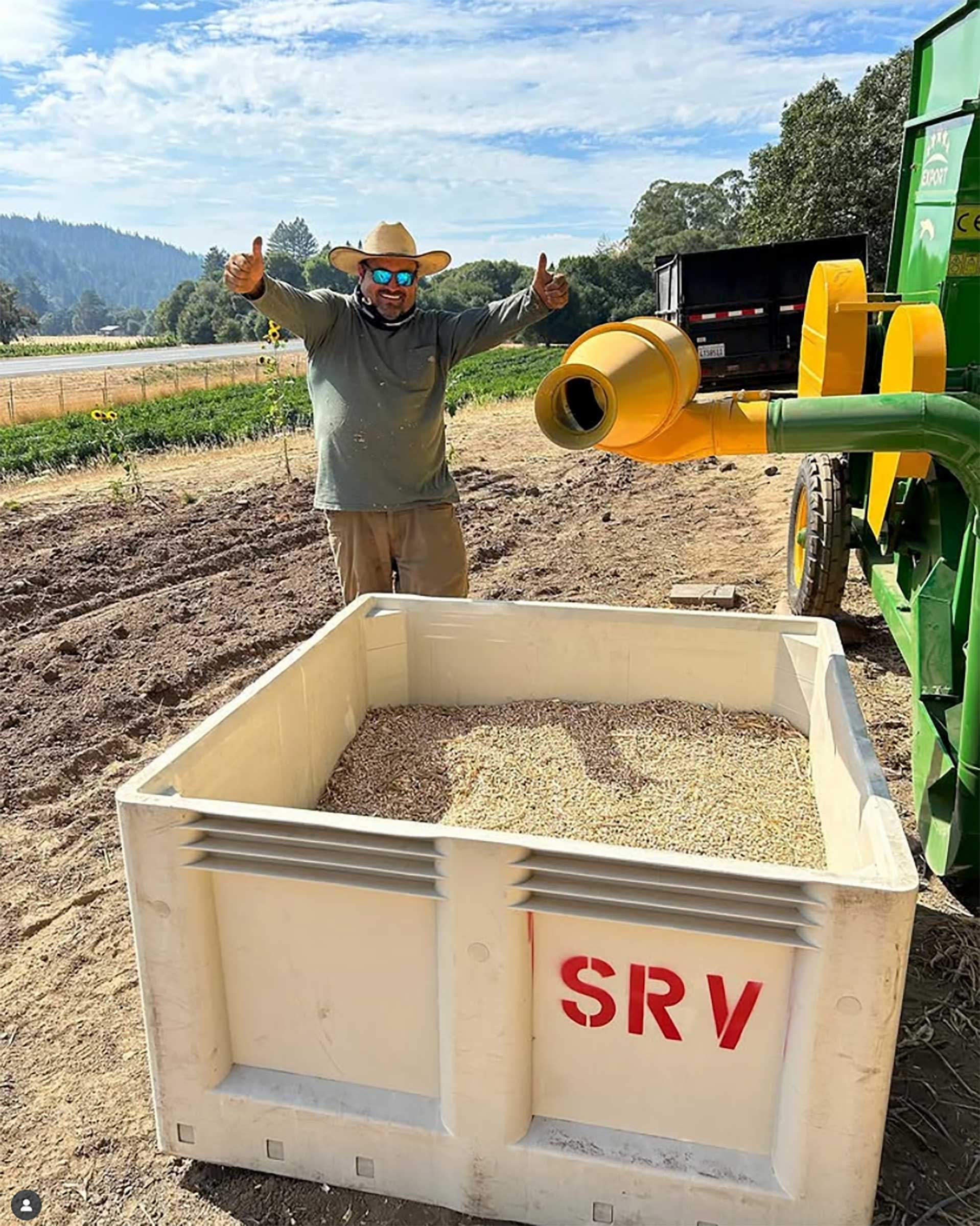
The key to making these partnerships a success has been our investment in scale-appropriate equipment to clean beans. A few years ago we imported a small-scale thresher from Turkey, which breaks open the pods to release the beans and removes large plant material. This spring we received a grant from the USDA to invest in a small-scale seed cleaning machine. Now we can clean the beans—sorting out split beans, rocks, dirt, and plant bits—much faster. This replaces most of the hand sorting that beans require before they are packaged.
These two pieces of equipment, in addition to making it much easier for us here on the farm, also allow us to buy freshly harvested beans and process them ourselves. We’ve come a long way since we built a bike-powered bean thresher in 2020, but processing the beans remains a labor of love, with everyone on our farm helping to deliver a delicious product.
While we haven’t quite reached a cost of production that makes it possible for us to sell our beans in stores, they are available on our website as long as the harvest lasts. We’re excited to keep building our local supply of staples and look forward to growing a larger community of both bean growers and bean eaters here in Mendocino County, and beyond!
Not Scary at All!
Stovetop Cooking for Beans
While cooking beans from scratch can be a little daunting if you’ve never done it before, there’s no reason to be scared. It really takes quite minimal effort and you’ll end up with a better result than the taste of canned beans. Our beans have the harvest year noted on the back of the package. Since they are so fresh, I haven’t found the need to soak them and think you get a better result if you don’t. For grocery store beans though, soaking will often help reduce cooking time since you don’t know how fresh they are.
INGREDIENTS
• 1 pound dry beans
• Optional: chopped onion, garlic, herbs, dried chiles
INSTRUCTIONS
Rinse beans and remove any debris before adding them to a pot (I like a dutch oven). Cover with about 3 inches of water and turn heat to high.
You can add aromatics like herbs, chopped onion, garlic, or dried chiles. Personally, I just make the beans plain the majority of the time so I can use them in multiple dishes.
Bring beans to a rolling boil and let them boil for 15 minutes. Reduce heat to a simmer and cook until beans are tender. You’ll probably have to add more water as you cook the beans (I like to have an electric kettle of hot water nearby while cooking them). Salt the beans after another 20 minutes of cooking.
Cooking time depends on the freshness of the beans but can be anywhere from 45 minutes to 1.5 hours. Start tasting them at the 45 minute mark. You want to be able to eat about 5 beans in a row and have them all be fully cooked to ensure the pot is ready—a tip from Chef Samin Nosrat.
Store the beans in their cooking liquid in the fridge and add them to different dishes throughout the week.
Order beans and other locally-grown delights at: boonvillebarn.com
Gideon Burdick runs Boonville Barn Collective with his wife, Krissy Scommegna.
Photos courtesy of Boonville Barn Collective.