Elderflower
Spring’s Sweet Blossoms
by Holly Madrigal
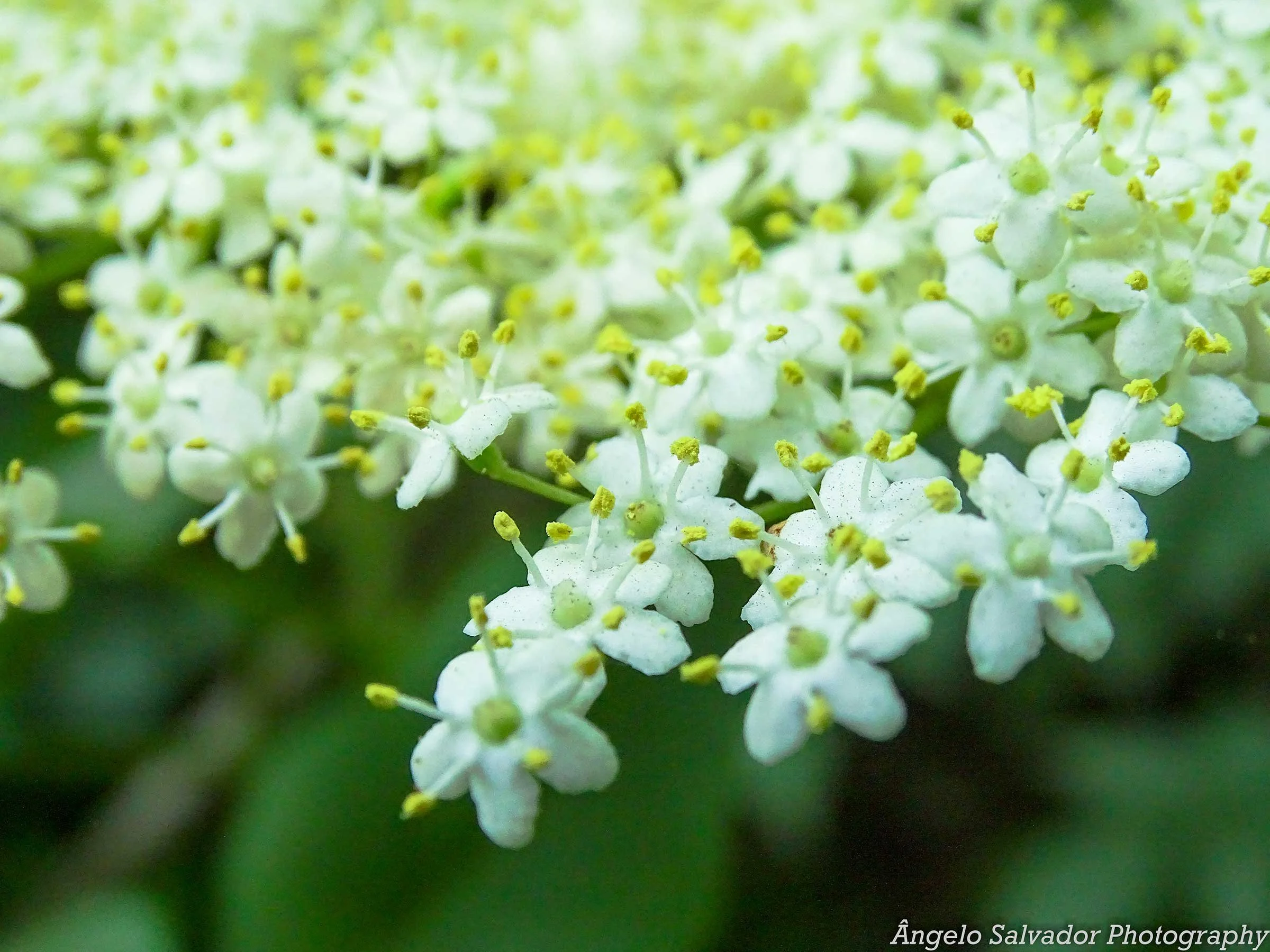
Crowns of white fluffy blossoms are covered withpollinators. It must be elderflower season. Here in Northern California, the elderflower bushes grow in head-height tangles. In the late spring, the blossoms really put on a show. The cream-colored umbels have a lacey appearance, adding bursts of delicate embellishment to the damp, shady woodlands where they can be found.
The flavor of elderflower has experienced a bit of a renaissance. This may be due to the broad appeal of Ikea’s canned elderflower soda or even the craft cocktail trend, which popularized St. Germaine liqueur and its essence of elderflower.
Those who want to forage for this treat will be rewarded by an enigmatic taste of lychee, citrus, and honey. The blossoms can be made into a cordial, tea, or a tasty liqueur with flavors that go well with gin or champagne.
Elderflowers have multiple health benefits, including high levels of vitamin C, antioxidants, and chlorogenic acid, a compound believed to help lower blood pressure.
When harvesting, snip just below where the blossoms connect at a single stem. Knock it slightly to remove any of the bugs that also love elderflowers. For the most flavor, wait until the morning moisture has dissipated. Utilize the flower bundles before they have wilted too much. Consume only the flowers, as stems and leaves are highly toxic. The berries of some species are edible, but avoid the red berries altogether and only consume the black or blue berries after cooking.
As with any foraging adventure, make sure to properly identify what you are harvesting, as well as getting permission from the landowner prior to picking anything on private lands.
Elderflower Fritters
This unique treat can be served either sweet or savory, depending on your mood. The recipe below was inspired by forager and author Rachel Lambert. For a sweet option, serve dusted with powdered sugar and slices of lemon. If you are feeling savory, make a dipping sauce of equal parts lemon juice and soy sauce.
Serves 4-6
INGREDIENTS
1 cup ice-cold water
1 large egg, beaten
1⁄2 cup tempura flour
1⁄4 cup finely ground corn flour
2–3 ice cubes
Sunflower oil, for frying
16 elderflower heads, stalks intact
INSTRUCTIONS
Lay out two plates or a tray with paper towels. Pour the ice water into a medium-sized bowl, mix in the egg, add the flour and roughly fold it in with a fork. Do not beat it—the batter should be lumpy. Add the ice cubes. Once the batter is mixed, you will want to move quickly to keep the batter cold.
Heat at least 3⁄4 of an inch of oil in a wok or a frying pan.The oil is hot enough when a drop of batter sizzles when dropped in.
Hold a flower head by the stalk, dip in the batter to coat, and lift up, allowing any excess batter to return to the bowl. Keep hold of the stem while dropping the coated flower head into the oil. Hold the stalks with tongs and cook until golden and crisp. Remove and place on the paper towels. Repeat with all the flower heads. Remove the stem before presentation and serve hot.
Holly Madrigal delights in sharing what’s great about Mendocino County. She enjoys meaningful work with the Mendocino Land Trust and publishing this magazine.
Photo by Angelo Salvador, CC BY-SA 4.0 <https://creativecommons.org/licenses/by-sa/4.0>, via Wikimedia Commons
