Toulouse Vineyards Botanicals
Rita Vodopals Has a New Take on Old Wines
by Dawn Emery Ballantine
We often think of winemaking as an ancient, unchanging art, imagining little difference between the wineries of today, the monasteries of the Middle Ages, and the vinaria of ancient Rome. But in reality, a winery is an ever-changing hub of creation, always taking the fundamental ingredients and adjusting for the shifting conditions delivered by the climate each year. Even when the grapes are a constant, changes in the water, temperature, soil, and microbes can give one year’s wine a wholly different flavor from another.
Winemakers are always trying new grapes, new blends, and new processes. They innovate incessantly, percolating new ideas and rediscovering old ones. Very little has truly never been tried before, after all, but applying their experience and preferences puts a unique spin on long-established techniques. And visiting another part of the world has a way of inspiring a winemaker to look at old methods with fresh eyes.
For Rita Vodopals, Assistant Winemaker at Toulouse Vineyards, a 2017 trip to southern France sparked the idea of creating wine-based botanical beverages. She traveled with Toulouse owners Maxine and Vern Boltz. Rita says that in France, she had “the most beautiful experience,” learning about and tasting wines from different European winemakers.
During her stay in Languedoc, Rita tasted a Noilly Prat vermouth unlike any she had ever had. She recalls her reaction: “They were floral, they were beautiful . . . Where can I get these! They are so amazing!” The producers informed her that this variation of vermouth was not exported to America, as the bitterness and herbal complexity is generally not appreciated here.
Rita returned to Philo inspired, with a desire to create delicious, complex botanicals of her own at Toulouse Vineyards. In 2018, she made her first batch of vermouth. In 2019, she tackled amaro, the Italian equivalent, which hails back to medieval times and is historically characterized by its highly variable herbal profiles.
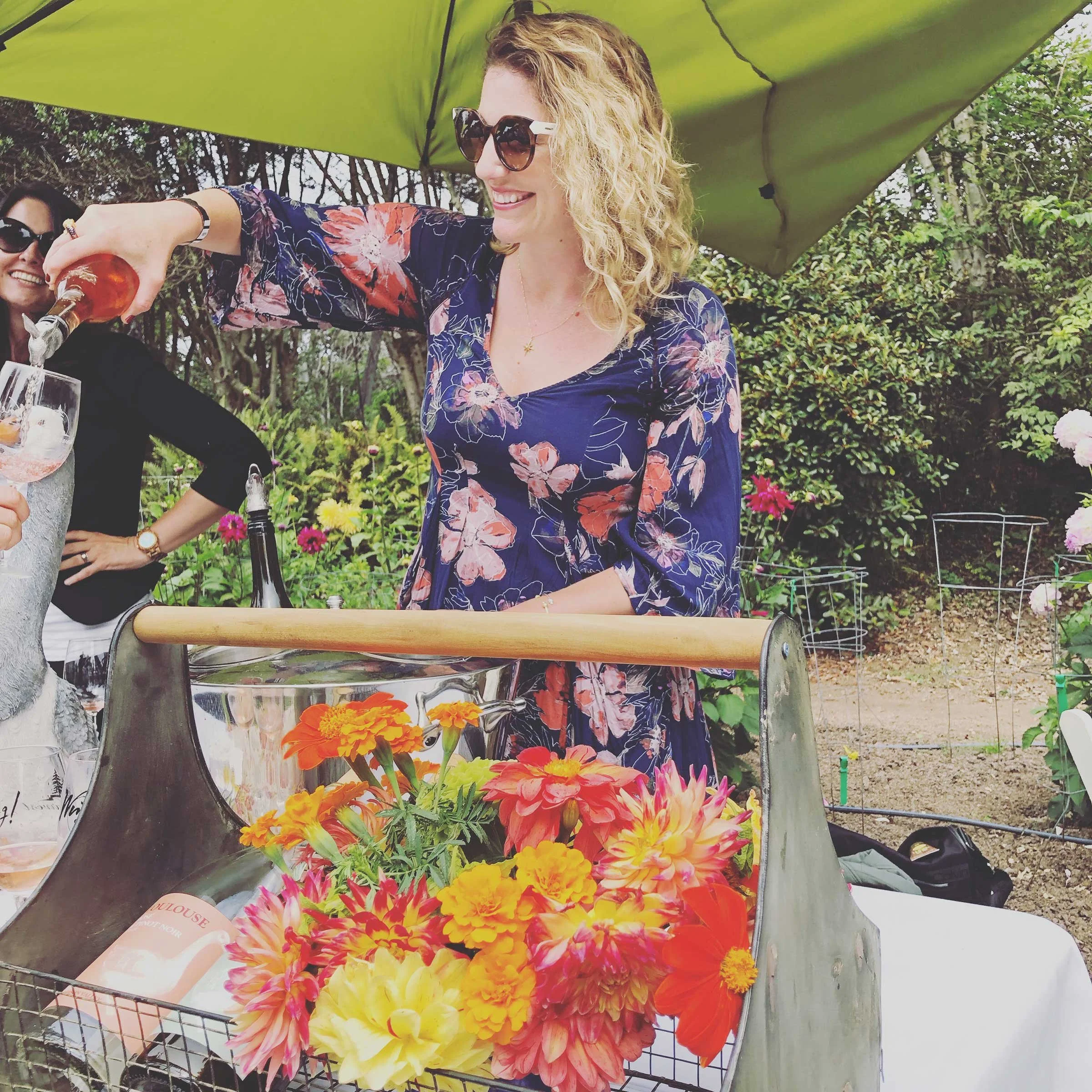
Rita shares her wines at events.
Each region in Italy uses its own herbs and spices in its local cuisines, and these are typically reflected in the regional amari (the plural form of amaro, the Italian word for bitter). Rita wanted to use warmer spices in her creation, hoping to “balance sweet, aromatic, and bitter herbs in a nice blend” that would be acceptable to American palates. She says the resulting concoction is fresh, natural, and healthy. “It is good for you—think of your favorite tea and your favorite glass of wine, melded.” There is no sugar in her blends. Instead, the sweetness is found only in the herbs used and the wine base. Many of the herbs also have various health benefits, often for digestion, while still providing a relaxing, palate-pleasing drink. Toulouse now annually produces 90 cases each of its three botanicals—Rita’s Toulouse Amaro, Rita’s Toulouse Vermouth, and Quina Rita.
Raised in Albion on the Mendocino Coast, Rita went to Humboldt State University for microbiology. She never expected to return to live or work in the area again, but when she came home after graduating in 2004, her father insisted that she get a job. Microbiology degree in hand, she was hired by Roederer Estate, where her time was split between the lab and the tasting room, which she refers to as “a perfect start.”
Prior to working at Roederer, Rita would have said she didn’t like wine, but that opportunity introduced her to some of the best. She admits that she “got a little spoiled with the wine” there, developing both a love for sparkling wine and a passion for experimentation and creativity.
When Vern approached Rita about assisting him in opening up a tasting room, she was ready for the challenge. She enjoyed the creativity the role required, recalling that “[Vern] was learning too, and every day was a fun little experiment.”
That was 25 years ago. Rita has thrived in her role running the tasting room and creating wines. In addition to pinot noir, Toulouse makes a broad range of wines, adding sparkling to their offerings not long after Rita came on board. She has particularly enjoyed developing the botanicals—specifically amaro, which utilizes a base of Toulouse’s organically grown pinot noir grapes, picked while still high in acid and relatively low in sugar. For the wine geeks, this means that the grapes for botanicals are picked at 19 brix, while those for pinot noir are typically harvested at 24 brix. Picking the grapes earlier, according to Rita, “keeps it light and bright” and results in a longer shelf life. The grapes are lightly pressed, with minimal skin contact, resulting in fewer tannins and a lighter color.
The juice is poured into egg-shaped containers made of stainless steel or food-grade polyethylene to avoid imparting any other flavors into the finished product. The organic herbs—wormwood, chamomile, bitter orange peel, sarsapa- rilla, cinnamon, and more—are placed in large tea bags and mixed into the wine base. Some of these herbs are grown on site, but most are sourced from Mountain Rose Herbals, a purveyor of bulk organic herbs based in Eugene, Oregon.
Rita tastes the blends weekly and adjusts the herbs and spices as needed over the next three months. Then the wine is racked to remove sediments, and then bottled, at which point it’s ready to drink. Though they can be stored for three to five years like a gewurtz or riesling, Rita recom- mends enjoying the botanicals while fresh to fully experience the subtle complexity of all the flavors. As they age or are exposed to air, they may lose the more delicate flavors.
Toulouse Vineyards is on Highway 128 about a mile outside of the tiny town of Philo. Originally the tasting room consisted of a charming arrangement of chairs grouped around wine barrels in the “garage,” with conversation and service by Vern or Rita. Now it’s a gorgeous combination of indoor and outdoor seating with sweeping views of the trees, the valley, and the vineyards. The vibe is relaxed, with birdsong replacing the rush and bustle of everyday life.
Wickson Restaurant, located just up the road from Toulouse at The Madrones in Philo, discovered Rita’s botanicals early on. Chefs and founders Rodney Workman and Alexa Newman created an aperitif called “The Rita,” a combination of Rita’s Toulouse Vermouth, cava (a sparkling wine), and citrus garnish. Later, Chef Jason Azevedo invented a drink similar to an old fashioned, known as the “Antiquado,” a concoction of Rita’s Toulouse Amaro, cava, and port, with citrus and cherry garnishes. Rita especially likes the Antiquado, saying, “That’s genius. I love the taste of it.”
Occasionally another winery or wine aficionado will dream up something new, such as Handley Cellar’s use of Quina Rita (a botanical based on cinchona bark and other herbs), which they combine with tequila and a splash of citrus to create a refreshing margarita-like drink. Toulouse also offers a number of recipes to create aperitifs with their botanicals, and their attention to detail is delightful. Take the Amaro Rita, which calls for amaro-based ice cubes frozen with tiny damascene roses, butterfly pea flowers, and citrus peel; 1 part Rita’s Toulouse Amaro; 1 part Toulouse Goose Bubbles; and a twist of the citrus of your choice. According to Rita, the botanicals “change so drastically in a really cool way with the garnishes.” One of her favorite garnishes is blood orange, both for the flavor and the color. Toulouse’s own sparkling wine, Goose Bubbles, boasts smaller bubbles and a very creamy mouth-feel, with flavors of toasted brioche or even caramel. Delicious on its own, it becomes something more floated on top of iced amaro. And in the cooler weather, Rita likes to create mulled amaro by gently warming it with mulling spices (she uses a Mountain Rose Herbal mulling spice blend), garnished with a blood orange slice and a calendula flower.
Amaro was created in Italy in medieval times by monks, who used it as a digestive aid and as a component of other herbal medicinals. Before long they were Europe’s most popular health tonics, widely sold by monasteries and apothecaries. Sidestepping all the hullabaloo about whether or not wine is healthy on its own, Toulouse’s botanicals offer a kind of tincture, using wine as the basis for herbal healing. “It was our medicine,” Rita says. “It can be again.” An eternal optimist, she takes joy in the human relationship with wine, noting that, “Humanity has been drinking wine forever, and it’s so lovely. And it keeps people in the moment.” If you’re curious, why not create one of Rita’s botanical concoctions, or find a local restaurant that serves them, and savor the rediscovered flavors of centuries past.
Toulouse Vineyards
8001 Hwy 128 Philo
(707) 895-2828 | toulouse vineyards.com
Open Daily from 11:00am - 4:00pm
Toulouse botanicals are available in the tasting room and to wine club members in
the Bubbles and Botanicals package. Or visit a local restaurant for a delightful taste.
Dawn Emery Ballantine is the proprietor of Hedgehog Books in Boonville, where she seeks to make reading affordable.
Photos courtesy of Toulouse Vineyards